
Understanding Organizational Structure
Designing an org structure around roles rather than people, mapping current and future state, and writing role descriptions that make accountability clear without falling into micromanagement.
About this episode
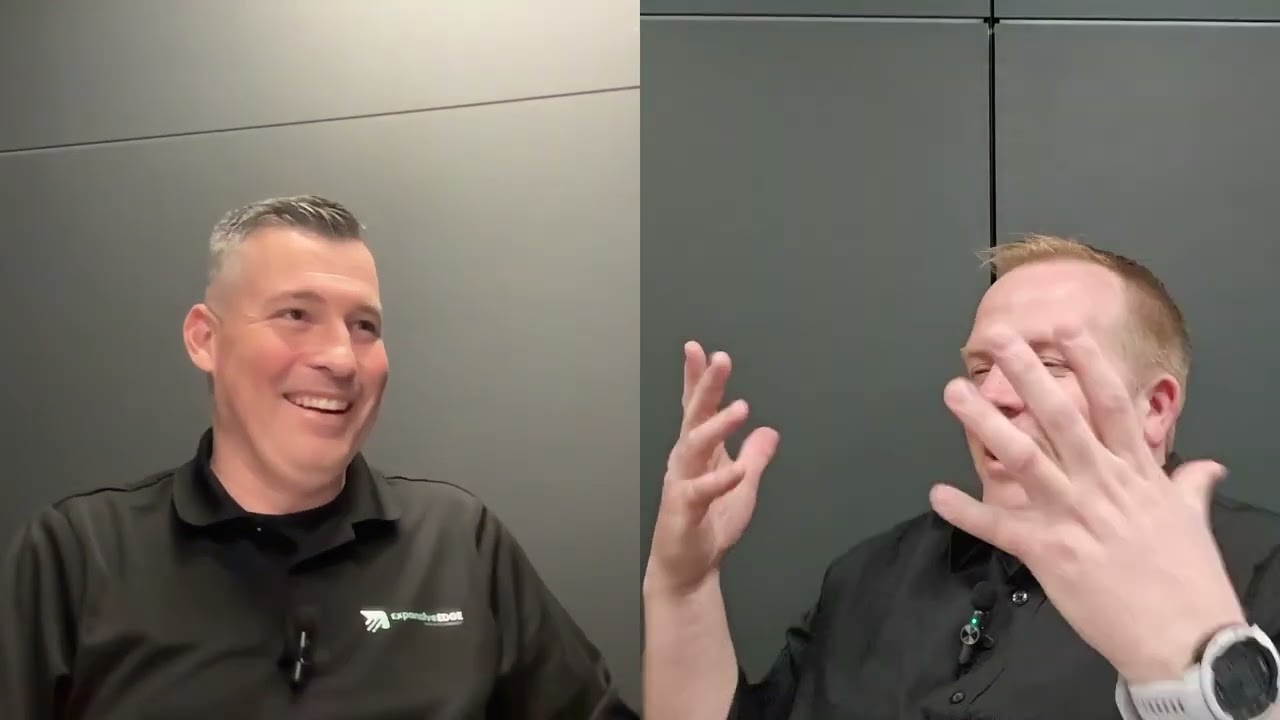
Recorded in person in Calgary, Josh and Lyndon walk through how to build an organizational structure that actually works as a business grows. The key distinction Lyndon hammers on throughout: org charts should report role to role, not person to person. That structural choice surfaces how many hats the owner is actually wearing, marketing manager, sales manager, ops manager, all reporting to themselves as president, and where to start hiring or delegating from.
The conversation hits the practical mechanics: document your current state, map your three-to-five-year future state, and use the gap between them to inform what role gets hired next. Lyndon references Dan Martell's Buy Back Your Time as a guide for measuring where your time actually goes and where to start offloading. They get into the rule of thumb of no more than seven direct reports, the difference between leading individual contributors and leading other leaders (the typical $1-2M ceiling where many owners get stuck), and the importance of accountability for outcomes rather than activities, which is what lets you avoid micromanaging remote teams. Josh's reframe lands well: when results are off, look at the process before you blame the person.
The closing thread is that structure isn't rigidity, it's clarity. People perform better when they know what they're accountable for and what "done" looks like, and the gray-area duties-as-required can sit alongside that without eroding it.
Chapters
- 00:00:00 Intro: org structure, org charts, roles and responsibilities
- 00:00:48 Defining the org chart: current state and future state
- 00:01:51 Why role-based not person-based reporting
- 00:04:30 Measuring your time and finding your superpower
- 00:10:11 The chassis every business has: marketing, sales, ops, finance, HR, IT
- 00:12:24 Outsourced roles still belong on the org chart
- 00:13:58 Roles, accountabilities, and avoiding micromanagement
- 00:19:00 Person or process? Diagnosing performance issues
- 00:21:08 Span of control: seven direct reports rule of thumb
- 00:26:14 Reactive vs proactive hiring and the kitchen sink admin
- 00:30:23 Takeaways: structure as clarity, one line of reporting
Tap any chapter to jump to that moment on YouTube.
Key moments
“You can't improve what you're not measuring. So the first thing you got to do is measure what you're doing with your time.”
“Find out what your superpower is in your business and just be more present in that space.”
“I don't really care what they do as long as they get the job done.”
“I always take a look at the process before take a look at the person.”
“Shared responsibility is no responsibility.”
Your hosts

Joshua Leyenhorst
Founder of BasePoint CPA. Chartered Professional Accountant (CPA) and Certified Exit Planning Advisor (CEPA), helping business owners see the full picture of their numbers.
More About BasePoint CPA →
Lyndon Smith
Founder of Expansive EDGE. Two decades in projects and design across six continents, focused on operational leadership and continuous improvement for small and medium-sized businesses.
More About Expansive EDGE →
Full Transcript
Show transcript
Hide transcript
Auto-generated from the YouTube captions for this episode. Click any timestamp to jump to that moment in the video.
00:00 Okay. Hi there. My name is Lyndon Smith and welcome to another episode of the business growth factor. Today we're going to be speaking about organization structure, organization charts and roles and responsibilities. Uh we're recording out of platform Calgary here in Alberta and um I've got Josh on the on the line here with me today and as mentioned in person today. Yeah, we're we're actually in the same room here. Uh we're just yeah, just kind of navigating some of the camera angles and and setup here. So, we might not be looking at the camera today, but uh um yeah, we're
00:33 having an inerson conversation today, which is awesome. Josh has flown all the way out from Dawson Creek in British Columbia, and uh yeah, we thought we'd uh we'd sync up and do a podcast here in Calgary. Awesome. Excellent. So, what are we talking about today, Lynon? So, org structure and roles and responsibilities. Awesome. Okay. And so maybe like you know defining terms uh because you know if uh if I put myself in the shoes of somebody who might be listening maybe I have a business uh maybe I just started
01:06 a business so it's only me um why why would I want to care about org structure and what is org structure why would it be important right now so your organization structure creates a um a reporting line for every person or role rather inside the company and uh when we're taking a look at your organization structure. You effectively want to there's two ways to look at it. You want to document your current state. So you like how your organization looks currently and you want to take a look uh couple of years ahead, five, 10 years
01:40 ahead. What is your ideal look like? So what is the the um future that you're creating for your business, a future org structure look like? And uh you you start building all of that out. Um, one of the things to consider is when you're building out your org structure, it's not um, you're not putting it uh, people, you know, reporting to people. You're putting report putting a role or a function that reports to another role or function in the company. So, um, the reason why you do that is because you might be the owner or um, you might hold
02:15 a few different functions inside the company. You might be the all of them I suppose at the beginning. Absolutely. as a as a smaller businessme you're you're typically wearing a couple of hats and and fulfilling a bunch of different roles in the company as your company's growing but you need to understand you need to silo each one I say silo it's not my favorite word but you need to um group all the responsibilities for certain roles or functions in your company so that you know exactly what that role would be responsible for and uh even if you're wearing multiple hats
02:50 hats. So, as a business owner, you're probably wearing the um business development or sales rep kind of hats in your business. Um document what you're doing there. Um as as a sales rep or business development manager, whatever that looks like. Um what are my responsibilities? And you know, as a marketing person or HR or operations manager, what are my responsibilities? You document all of those responsibilities. And um now you can see I'm wearing you know three, four, five, six, seven
03:22 different hats in the company. Um what if this now is consuming me and my time and uh where do I need to start offloading? What do I least enjoy out of all these roles that uh you know that that I'm fulfilling and where do I start offloading and and start where's the best place to start hiring? And that allows you, you know, when you're when you've got your current state like mapped out and your future state mapped out, you can actually start seeing how you transition out of those roles and bring new people uh into, you know, like experts, people who know what they're
03:56 doing um into those roles, but you've already done the the the leg work and created a bit of a a system or a process for them to follow. Now you're just bringing them in so that they can improve and make it better. And I guess in doing it that way, what it probably helps avoid too is just the classic knee-jerk reaction of I'm busy. I got too much stuff going on as a business is growing. I need to hire somebody. And so you just hire somebody who does some stuff which is great, but then it's not necessarily specific to a particular role. Yeah. Um Okay. So, so when someone
04:31 just just quick question on that. So when somebody has a business and is starting to grow, should they try to like compartmentalize their activities at any given time? And so like right now I'm doing my business like my business development activity. Right now I'm doing my uh fulfillment like whatever it is whatever type of business is like obviously if if it's like a a trade contract or whatever like you're actually like on site doing work right. Absolutely. Yeah. You know there there's the whole estimating process right. So should they try to like compartmentalize their their time even in that in that way or absolutely um I mean this would
05:03 be another topic alto together but um yeah compartmentalize document what you're doing with your time for one and then categorize it. So, um, when you're doing outbound cold calling, lead generation, whatever, you know, categorize that. Document your time. If I'm spending five hours a week or 10 hours a week on on a um specific activity, understand where does that activity live in terms of a function or a role and then you're you're putting it in there and saying, "All right, um, you know, this this person is respons or this role is responsible for doing, you
05:36 know, performing these tasks." um you know and really accountable for those tasks and the results that they they get from that. Right. I like the idea of time too that you mentioned there because I guess you know at some point inevitably as a business grows that the business owner is going to be thinking I don't have enough time. Yeah. And so when they're like, "Okay, I need to hire somebody." You know, if you're documenting how much time you're spending on some of these things, as you say, at least you'll know, oh, okay, typically you'll be spending this much time on this, this much time on this because I have been for the last number
06:08 of months, whatever it might be. I think just going through the whole exercise of documenting documenting your time alone helps you identify like how much how inefficient you're you may be being with your time. Um Dan Martell's got a really great book. I recommend this to everybody. Um buy back your time. Really good book. Yeah. And uh he's got some really good um structure in there on how to start buying back your time. And I think it it all comes back to you know you you can't improve what you're not measuring. So the first thing you got to
06:40 do is measure what you're doing with your time. Um but then like once you've measured what you're doing with your time as a smaller business owner, you've got to categorize it. put that into like this is marketing, this is sales, this is operations, this is finance, you know, because you got to make time for for all of these things, right? And if you try to do it all at the same time, I guess you got to and this is maybe getting off track a little bit, but you have startup and close out time, right? Every time you switch switch gears and so trying to like not bounce between them multiple times throughout the day,
07:12 Yeah. is ideal, but difficult obviously for Yeah. blocking out focus time. So, um I I have to be really intentional about that with our business because I do a lot of consulting work. Um you know, I've got to I've got to actually block time out of my days and my weeks where, you know, I've got like a 4hour block of focus time uh for consulting work and that would be operational function. I could employ someone to to do that work but right now where we are with our business, I I'm doing most of it. So uh yeah it's just uh just
07:46 understanding where that fits into the bigger bucket right now just bringing it back to like your organization structure inherently and I think I mentioned this earlier um typically rather is what people are doing is uh Josh reports to um you know this person who reports to that person and that's how they build up the org chart typically uh think about Josh as a business owner um wearing multiple hats so Josh is the marketing manager and Josh is the um sales manager and Josh is the operations manager and
08:20 they all report to Josh who might be the president of the company right or the owner of the company. Now when you start doing that you can see you know how much time you're allocating to each one of those roles um and you can offload maybe operations or marketing and um you know find out where you're super hyper effective in your business and invest more time there like find out what your superpower is in your business and just be more present in in that space right and then hire someone to take over that
08:52 role so so when you say superpower I guess you're going to be looking at how much time you're spending But then also probably competency levels, right? So it's like here's something that maybe I'm not as good at in the operations of my business. So I should maybe hire somebody who can focus on that is way better at it than I am. Yeah. So your superpower would be like numbers in finance, right? Because uh you love doing it. It's uh it's it's your world. It comes naturally to you where you know someone else might look at the numbers and cringe and maybe want to throw up a little. Their eyes just dry out.
09:25 You know, I see uh when when I talk numbers with people, sometimes you can see there's this they just glaze over and they look blank because they they just that's not their space. That's not their superpower, right? Our superpower is uh you know organizing and scaling companies getting into the administrative component of your business and creating structure that actually works so that you can scale your business. That's our superpower. um you know other people might be networking sales you know like negotiations um winning deals right that's their superpower so understand where your superpower is in place that
09:58 strength um so bring people who have specific superpowers into the to sit in those seats uh in the structure so as far as the structure goes like do is there like a good template or sort of model uh that that you would suggest? That's a that's a great question. Um I no there's not. I think you know there's there's a couple of things to consider. Um every business has got the same kind of um chassis or framework that they operate with. Every business is going to need marketing. Every business is going
10:31 to need sales. Everybody's every business is going to have an operations component to it. That might look very different. Um you're going to need legal. You're going to need finance. So just understand what those different business facets are and that's how you design your business structure. Um you know if you if you have a a construction firm your structure would look different to a firm that might be like a digital marketing agency right because you have you might have project managers but um you know like how those project or
11:04 product man like that looks very different right you know across those departments. So at a very senior level, yes, you know, like the the structure could be replicated. Um but I I I think you know, in going through this exercise, go and like just jump on Google or online and and um you look at what structures exist. Yeah. Look at how your business is currently operating and uh you know, do we have a HR department? Because that's something that you're you know, like if you're growing past 50 employees, you're probably going to need to start looking at developing an HR
11:37 department if you don't already have one. you have an IT department, you know, those are certain functions that um you know, you might be offloading to an admin person or someone in the company's, you know, like responsible for or oftentimes ends up being even like say outsourced, right? So maybe a company will have an outsourced HR, outsourced it, outsourced finance, but at some point because even we find with uh with finance, you know, at some point as businesses get to a certain level, it makes sense for them to bring in somebody who's like a finance lead and
12:10 same with IT, right? You spend a certain amount each month on IT uh support, right? At some point, it makes sense to just bring somebody in full-time to take care of all of that. Absolutely. As you grow. Now, you bring up a really good point here. So, um when you when you are outsourcing that work, um it's still and we'll get into the next part of this conversation, which is the roles and responsibilities for that org structure. Mhm. So if you've got an orc structure and you've mapped it all out and you know what this currently looks like and what you want to grow into in future. So maybe it's uh we don't have a HR
12:44 department right now or maybe we don't have a technology division right now. Um you know that's something that or maybe there's a service division or something like that that you want to bring into your company later on. you can start mapping all of that out and then you can say like we're going to fulfill on these roles and responsibilities later on as we're growing and scaling our organization. Um but right now we might like this is what it looks like and we have an IT consultant. Maybe we're using an HR consultant, maybe we've got fractional council um like legal fractional uh
13:19 finance or a fractional controller or CFO in the company. Um so a lot of those those those positions or the the people fulfilling those roles are external. Yeah. But you can still define what their roles uh what the responsibility for those roles are so that when you're ready to to position that internally within your company um that you've got that clearly defined or even if you decide never to bring that internal or inhouse um you still understand what their responsibilities are and uh you can get a good line of reporting and you
13:54 know right tie it all in together. Yeah. Okay. So um more on the roles and responsibility side of it. So once you got your organization mapped out um with function based or rolesbased positions and not a a Josh and a Joe and a Lyndon and a you know this person reporting to that person, it's this role reporting to that role, right? Um and then you can put names behind those roles afterwards once you've got that clearly defined. So that's a clear distinction then, right?
14:26 is you're not necessarily reporting to a I mean, yes, you're reporting to a person, but that's not the Yeah. the That's not the framework of the reporting. It's role to roll. Yeah. Not person to person. Yeah. Okay. Um, sorry. So, once you've got that defined, Yeah. Once you've got that defined, then you then you can start drilling down into um creating now you can call them job descriptions, positional contracts, roles and responsibilities, but effectively it's all the um activities or results that those roles are
15:01 responsible or accountable for. Um when setting those things up, I always like to look at like what are they accountable for? What are the results that they're looking for? Um because then you've got some metrics uh some KPIs that you that you can benchmark against that role. Um you can see I mean they know exactly what the what results they're they're accountable for doing. Yeah. And part of that could be you these are the activities aligned with those results. But making sure that you have um accountability
15:33 against those roles is really important. Such an important part on that too. Just just kind of as a sidebar, you know, when you think of your roles in terms of the responsibilities that they have and the the results and the outcomes, then you have to worry less about the the tendency to micromanage that you might otherwise have, right? If you don't see employees on a day-to-day basis, especially with remote work, like all our team is remote, right? So if you if you have remote staff and you don't see them regularly, then knowing what
16:07 they're responsible for and knowing what the outcomes are is incredibly important. Otherwise, you're like, what are they doing, right? But if you're just tracking, well, what are the results? Okay, then it's happening. Yeah. If uh you probably I hate the term micromanaging and I uh I'm very very always very cautious about um you know landing in that being micromanagy um and I think one thing that has always like helped me is making sure that we're clear on what is expected from right your output um having a proper role or
16:42 job description or positional contract in place um with metrics against, you know, like you're accountable to achieve these results. Um, then then it's not a conversation about, you know, uh, let me help you, let me see what you're doing, you know, like being micromanaging. It's a conversation about, um, you know, like we're not hitting these targets or we're not getting these being met, yes or no, these metrics aren't being met. Um, like how can I support you? Then there's more conversation around coaching them to be
17:14 able to achieve those results, right? rather than, you know, um like what are they doing, you know? Totally. Uh like I don't really care what they do as long as they get the job done. Exactly. And um you know, if if we're if we're getting the job done, then we're in good shape. Yeah. Right. Yeah. Because I think when there's questions like that, like what are they doing with their time, then it starts to go down avenues that might not be healthy as far as the team goes, right? Absolutely. Yeah. you start changing your whole culture in your business to be like more micromanaging because you're you're
17:47 unsure of what they're doing. Um they're unsure of their expectations. Exactly. And I think as soon as u people are clear on on what what is expected of them, they can perform, right? Because they know you're you've you've set them up for success already. um you you've given them kind of the the parameters in which they they should be operating. Yeah. And uh it allows them to just you know free reign on on ensuring that hey I know I'm not performing here. I need to put in a
18:20 bit of extra time or I need to have a conversation with my um supervisor, manager, leader uh to say hey um you know like I need a little bit more support here either with you know to offload some of this work or maybe I need to go for training or you know I need a little bit of handholding here uh this is new but it it empowers them to actually have that candid conversation with u you with their leader. Yeah. um which also empowers the business to be more progressive and you know like have a better culture open open um culture in
18:55 terms of like performing. Yeah. Yeah. Well, then you also get away from that whole like that fundamental like attribution error where you're if you're seeing that results are not being met um but you don't have clear expectations of what those results are then attributing it say to the person right it's the whole differentiating between like is it the person or the process right and quite often if you lack good process and good structure um then oftent times it may look like it's going off the rails but then it might be attributed to the
19:27 simply because there's no way of actually determining whether or not the process is being followed. You you bring up such a great point there. You know, I always uh I always I always take a look at the process before I take a look at the person, right? So, if someone's failing or someone's not performing, I mean, first of all, you got to understand like that they are not performing and have proper metrics in place uh that they're accountable for results that they should be producing. Um so that's the first step. But then if if they're not achieving those results,
19:59 there could be something that's uh that's broken in your process or maybe the you the bar is set too high, you know, I think, right? Um you know, I wouldn't ever actually go down that path because you always want to, you know, push your guys to or your team rather to to perform better. Um but yeah and sometimes it might be something in your process that needs to be looked at and uh something that's not maybe setting them up for success or empowering them or slowing them down um for from achieving the results they need to achieve. Now you get into some complex org structures where you know it's it's
20:32 uh becomes a bit difficult to navigate through um you know like you've got a lot of people that uh or one person that's reliant on a lot of people to get things done. Now this is where if you've got roles and responsibilities and those um you know those those uh accountabilities you know assigned for each one of them then all the way up the chain you can you can see where where it's getting broken and you can actually address the problem or the issue um you know like at the grassroots right
21:08 okay yeah um what about uh size so like what are your thoughts on you know if so you have this org structure people like roles reporting to roles but of course you'll have multiple people in roles reporting to a particular role how many would would you say would be an ideal size for say like a pod or how many people should report to one particular person that's a great question and um I don't know where uh where the where their num number comes from but um from my experience it's you shouldn't have
21:41 more than seven people reporting into you. Um that doesn't mean you might you might have like 50 people that you're responsible for ultimately. Um but you might have seven people reporting into you and they might have you know people reporting into them crews teams whatever um the business structure looks like and um yeah so you might have a you know a big portfolio that you're managing but you you should have you people that are reporting into you that h are responsible for different legs in that. So, I mean, if you take a look at like a
22:13 CEO, um, you know, they're not typically not going to be, um, responsible or not responsible, they're not going to be focused too much on the middle management and and lower um, you know, in terms of engaging them and holding them accountable. Um, they'll be speaking to their CMOs and their CFOs and their COOs and their So, they're more thinking departmentally, right? Whereas boots on the ground are typically going to be Yeah. managed and you'll have oversight by Yeah. first level managers, second level managers,
22:46 etc. Correct. Yeah. Okay. Um and and I mean just you know with that in mind, we had a we had a conversation a couple of weeks back um on OKRs. Yeah. And you know where where that really becomes valuable and and OKRs is just one framework that you could leverage. Um but ultimately what you want to do is you want to have good structure uh in terms of your objectives, your company goals, the top level and have them cascade down into your teams and crews uh down you know like at the operational level, right? Yeah. Okay. So the
23:20 objectives kind of inform key results. Those key results inform um you know the next layers objectives and then they can define their key results you know for that and that informs the ne next layers objectives. So um as you sort of cascade that down through the organization it's everybody's clear and they're working towards the same ultimately the same goal. And so each role then that you've defined that has a function, has a purpose, as a deliverable plays a role in that cascading OKR. Absolutely. Yeah.
23:55 Yeah. Pretty cool stuff. Yes. Very much so. Yeah. Okay. Um what are your thoughts? This is kind of one out of uh left field a little bit, but as far as um looking at applying different org structures from entirely different industries. So at the beginning of our conversation you mentioned um you know you might have say like a marketing agency yeah or say a construction company both of them are going to be sort of like well not necessarily project based all the time say with marketing but uh oftentimes you'll have a marketing project right where you have projectbased type
24:28 organizations you know you theoretically you might have a similar type org structure so like is there sometimes maybe value in looking at other types of industries and be like oh interesting they arrange their org structure in this way. Maybe we should look at applying that to how we arrange our org structure. Yeah, absolutely. Um, you know, I think studying other companies organization structures is is all part of this whole process. Um, and I'm going to go back to one of the statements I made earlier. You like start with the end in mind. So, you know, you want to get your current
25:01 state documented. That's super important. Um, but you want to also take a view on on what it is that you're you're creating. So as the executive team or the leadership team in the company is like what does the next 10 years or five or 10 years look like? Where do we want to be? What do we want this company to look like? And as we're growing into that, you know, are we developing a new department? Maybe it's R&D, maybe it's um, you know, like a technology division, maybe we're um, you know, opening up a a service or warranty division, you know. So it it it all
25:33 depends on um yeah like what that that long-term view looks like and then yeah like growing into that and I suppose if you have that mapped out then when you do your annual strategic planning the question is more do we hire this next person this year. Yeah. Right. So you've got it already envisioned and mapped out. It's not a matter of what type of person are we going or what type of role are we uh needing to hire for. It's more okay like based on this plan on this map we're at this stage based on our revenue
26:06 projections for this upcoming year this is what we're going to need to fulfill this this role is a go this year 100%. And I think you know uh just something I want to comment on there is um a lot of the times or a lot of companies that I've worked with is they're they're very reactive in terms of oh we need to hire someone to take over this. it's like we're super busy here and then they rush the hiring process and then they bring someone on board and they might not necessarily be a great
26:38 fit because they quickly whip together a job description for uh you know this you know position and um you now they've got the person in the company and it's not they're an awful fit for the company it's just it could be a whole lot better and I think if you're creating if you're progressive in nature and you're you're doing that, you know, quarterly planning and those annual strategy sessions and you're you're creating, you know, this org structure that you're growing into rather than being reactive. Right. Your
27:11 results and your performance of your team are just so much better. Right. Right. Um it's it's planned growth at that point instead of knee-jerk reaction. 100%. And you know, I've I've I've gone into a company where um they had an admin person um they referred to her as the the kitchen sink because uh she did everything else. Everything everything got loaded onto her, you know, it could be um like everything got loaded onto her. And yeah, all she wanted just was some clarity on, you know, like does
27:44 this fall part of my role like health and safety? Should we not be right, you know, getting a health and safety person responsible for this or, you know, exploring government grants and funding opportunities for for programs that we're rolling out in the company. Um, you know, so so it's just, you know, like getting clarity on because I mean she was just overwhelmed with with everything that that came in her direction. Sure. Not incapable, not incompetent, but just overwhelmed because lack of clarity of of what she should be spending her time on. and and uh you know I think you know presidents
28:17 of the companers or leaders of the company they can't expect people to operate at the same level that that they do I mean they're not invested in your company the same way that that you are right so if you create that structure and you create those guide rails and you can say you know like here's a little bit gray area that's fine you want to try and eliminate the gray area but this is this is what you're responsible for these are the outcomes that you are accountable for Um that's so much more powerful than just saying oh hey look at this um you know just
28:50 let me know what you think or can you get this done for us sure I like what is the the other duties as required type stuff right yeah what is the definition of done I mean like how do I know that I've actually performed this like yeah to an adequate level yeah yeah yeah and um I've seen it create tensions in organizations where there should be no tension existing there where you there's the expectations were up here, the delivery was down here, but the uh communication around what was expected was non-existent, right? So, and that's why just setting setting up these sort
29:25 of parameters um roles and responsibilities having your org structure that you can see that that admin person that you have in your company that's running your um you know payroll for you that's you know doing the hiring and firing and you know the um everything else on the HR side that that uh you know kind of like oh you you sort this out. Yeah. Um once you start seeing how much that person takes on uh and that they're operating like you know in different areas that are not necessarily their expertise but they're
29:56 figuring it out and getting it done you know like it it you start seeing where you can start offloading or bringing another resource in to take that or maybe another consultant to to take on some of those responsibilities. Well what you also might end up running into in those situations too is multiple reporting roles too right because it's like oh so and so can do this. Oh, great. So, then somebody from a different department comes over and says, "I heard you could do this. Could you do this?" Oh, man. And they're like, "Oh, okay. So, am I now also reporting to you because you've asked me to do this?" And that's that's one of the reasons why, you know, the organization organization structure has one line of
30:30 reporting. Yeah. You might have that matrix component in in certain organizations. Yeah. Um, but you should only have one person that you're accountable to. Um, you know, I think who you can ask a question to, right? Be like, "Hey, so and so asked me to do this." Yeah. Is there something top priority? Yeah. Exactly. And um you know I think you know on that note we're going to wrap up here. Um you shared responsibility is no responsibility. So if you have a resource that you share um you know there's there's no responsibility effectively. I've heard
31:02 it put uh if everyone's responsible for something then no one's responsible for it's not going to get done. Yeah. Exactly 100%. Maybe just kind of quick wrap up like for someone who doesn't have an org structure in place um you know maybe has a company that's that's established but growing so maybe between one and three million topline revenue or something. Uh what would you suggest as some next steps that they could take? Well, take a look at your how your current current org structure looks like. Is it flat? Do you have everyone reporting into you? That's a that's a
31:33 really good uh like indicator that you know there's some red flags that you need to look into. Do you have more than seven people reporting directly to you? Um, you know, that could be something that uh that you might need to look at and um you maybe start delegating leadership to other people on your team. Um and and and that's that's a bit of a challenge because you know you you kind of you started growing this and you you got to start relishing control and you got to start letting things go. But it also is is when we say that it can sound bad. Don't let things go but let things
32:05 go to people. Yeah. let them be responsible and accountable for results, right? And I think it's just getting clear on what that that result like what it means, right? Mhm. Um Yeah. And then go and study other companies that are operating in the same vein as you. Uh understand like what what do their org structures look like? What is it that you're creating? What does that org structure potentially look like? Um do you have are you outsourcing some of this stuff? You can you can still put that in your or org structure
32:38 that you you have a consultant that you're leveraging or a bookkeeper that you're leveraging for finance, you know. So, you might be wearing the finance manager hat and you might have an accountant and a bookkeeper, you know, and maybe someone managing or administrating payroll um put all of that in there. Yeah. Um you know, as as functions, payroll administrator, bookkeeper, accountant, whatever. Um and then start understanding take a view on what this all looks like and then how do you actually want it to look in future what is that ideal look like because
33:10 once you've created that ideal um that's something that you start working towards right and then and in the process you think you've thought through all of the different roles and functions and responsibilities that come as a result right and then you're not like oh I've been running my business for two years and didn't even think that I needed to have insurance Of course, some small thing like or large thing like that, right? Who's responsible for insurance, right? Like who's responsible for actually taking it on and you making sure that it's current and you know like the most optimal you know actually
33:44 covers what you need covered. Yeah, exactly. Um I think the one thing that uh you know one question that might be coming up is uh you know if we create this structure does it it does it not um eliminate that flexibility or that uh you know um is it too rigid? Is it too rigid? And and the answer is that's exactly what your people need. They need structure. Um you know I I think you shared a book with me good night sleep tight or and and going through there I I read something around um you know your
34:18 kids need structure like you know same time structure routine and um um I think it was assertiveness or something along those lines and I was like that's exactly what it need what it everybody needs right you need structure you need routine and you need um you know strong leadership right yeah Yeah. And um you know that structure is this is where I'm going to operate and this is where I'm I'm know that that's what my respons what I'm what my responsibilities are and I'm going to do
34:50 that really well. Yeah, I might be asked to do a couple of things here and a couple of things there. That's the gray area that that's absolutely fine. You know, you can put that into your job description or your role. the other duties other duties. Yeah. But ultimately what you as um whatever position you're fulfilling in the company, this is what you're responsible for. These are the results that you're going to be working towards. And then everybody's clear on that. Everybody starts performing a whole lot better because there's not like any gray area. Oh, if I leave this, maybe someone else
35:21 will do that or Yeah. No, I'm I'm responsible for that. Yeah. So, and you know what the definition of done is. Yeah. Yeah. 100%. um where if it's too loosey goosey and uh you know it's not um there's not enough structure. I think that the challenge is uh you people tend to sort of play in those gray areas and do only what they're comfortable doing and not what actually gets the results that the company needs or you know like what's going to move the needle forward. Um you might have a couple of high performing people on your team and a couple of people that need strong leadership still
35:54 valuable resources on the team but they need that strong leadership. Once you have that structure in place, it empowers everybody to operate effectively, efficiently. Yeah. And like really get good results. Yeah. Yeah. Excellent. Wrap it up over there. Okay. Well, thanks, Lynon. Thanks for joining us. It was uh yeah, awesome to to have a chat here in in platform. We can repivot to the uh the screen now that we've had an actual inerson conversation. Yeah. Thanks so much for joining us and looking forward to having you join us for the next episode of the business
36:26 growth factor. All right, thanks for joining. Cheers, Josh. See you in a bit.



Never miss an episode
Get helpful business tips and a heads up when we release something new.