
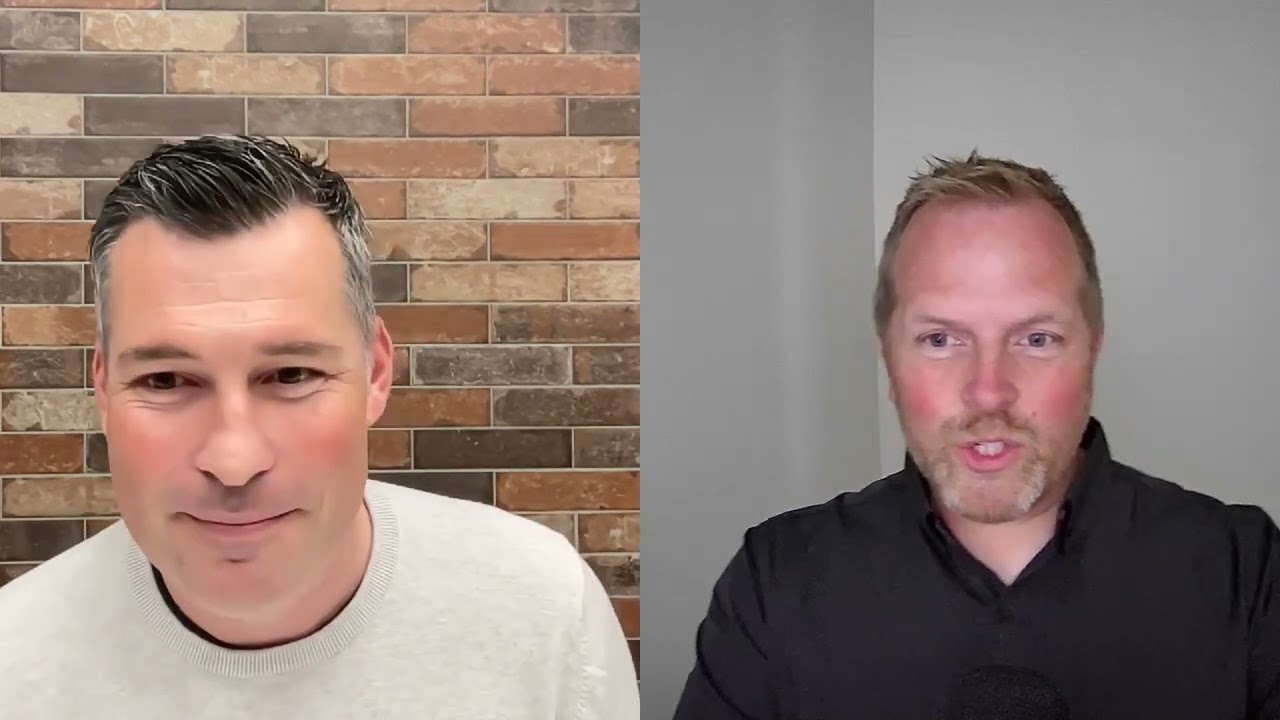
Revenue Drivers
The pilot episode. Josh and Lyndon introduce the podcast and walk through the six revenue drivers, leads, conversion, retention, referrals, average dollar per sale, and average transactions per customer.
About this episode
In the inaugural episode of the Business Growth Factor, Lyndon (South-African-born founder of Expansive EDGE, now in Cochrane, AB) and Josh (CPA, founder of BasePoint CPA in Dawson Creek, BC) introduce themselves, share how they met through writing a book together, and lay out what listeners can expect: pragmatic conversations about building better businesses, drawn from their own experience working with SMBs and trades.
The substance of the episode is Josh's six-driver framework for revenue growth: number of customers (driven by leads, conversion rate, retention rate, and referral rate) multiplied by average dollar per sale multiplied by average number of transactions per customer. They get specific about each lever, qualifying leads at the top of funnel, removing friction at the point of conversion (guarantees, social proof, easy payment methods), handling unexpressed unmet expectations to drive retention, asking for referrals at the right moment, raising average ticket through the McDonald's-style "anything else" prompt, and inviting customers back with seasonal or complementary offers.
The KPI reframe Josh nudges in, key predictive indicators rather than key performance indicators, runs through the episode. For owners trying to move from a vague "grow revenue 10%" target to an actual action plan, this is the foundation the rest of the series builds on.
Chapters
- 00:00:00 Introductions: who Lyndon and Josh are
- 00:04:06 Why a podcast: the book, the framework, the invitation for feedback
- 00:05:57 Driving revenue and the six drivers framework
- 00:09:53 Lead generation: networking, web, social, capture mechanisms
- 00:18:12 Conversion: guarantees, social proof, removing friction
- 00:29:45 Retention: consistency and unexpressed unmet expectations
- 00:40:23 Referrals: the warm-lead bridge and how to ask
- 00:46:37 Average dollar per sale: anything-else prompts and value adds
- 00:53:22 Average number of transactions per customer
- 01:00:05 Wrap-up and the next episode: financial pillars
Tap any chapter to jump to that moment on YouTube.
Key moments
“Another way I've heard them defined is key predictive indicators.”
“It's not about what you know or who you know but who knows you.”
“It costs six to seven times more to bring a new customer into your business than to re-engage with an existing or previous customer.”
“You need to deal with unexpressed unmet expectations.”
“If you feel uncomfortable asking, it may be because your delivery is not to the level that you think it should be to qualify you to ask for a referral.”
Your hosts

Joshua Leyenhorst
Founder of BasePoint CPA. Chartered Professional Accountant (CPA) and Certified Exit Planning Advisor (CEPA), helping business owners see the full picture of their numbers.
More About BasePoint CPA →
Lyndon Smith
Founder of Expansive EDGE. Two decades in projects and design across six continents, focused on operational leadership and continuous improvement for small and medium-sized businesses.
More About Expansive EDGE →
Full Transcript
Show transcript
Hide transcript
Auto-generated from the YouTube captions for this episode. Click any timestamp to jump to that moment in the video.
00:00 hi there my name is Lyndon Smith and I'd like to welcome you to the business growth factor this is a podcast on conversations about building better businesses I'm joined by our co-host Joshua Leyenhorst and uh like I said we're we're here to discuss how to how to build better businesses um little bit of background about myself I originally from South Africa so you you may uh you may or may not recognize the accent or you may be like where the hell does that come from um so yeah we my wife and I arrived here about two and a half years ago and uh I've got a company called Expansive EDGE we work with small to
00:34 mediumsized businesses typically in the trades and we support them in documenting their their business processes and empowering their people to be successful and um have the information they need to to get things done um I'm gonna hand over to Josh and let him introduce himself and uh then we'll we'll get into our first episode of the business growth factor awesome thanks lynon so just quick question when you said you came here where is here from South Africa oh my apologies yeah so uh we're obviously in Canada I say Obviously um but we stay
01:07 in a little town called Cochrane about 30 minutes 30 35 minutes west of Calgary and uh also about 30 30 minutes from the Rocky Mountains mountains 20 or 30 minutes from the Rocky Mountains and um we originally stayed in Vancouver for two years we uh in that time my wife and I had uh twins we were blessed with two beautiful babies and and uh we realized we it takes a village to raise a child and you know we've got two so we we decided to move closer to where the family is in in Canada and that brought
01:40 us across to Alberta so here we are in Cochrane very awesome yeah so two baby twins so if ever you're on here and you've got bags under your eyes we know what's going on absolutely yeah let's hope those days are done yeah right okay yeah um little intro here so um Josh line horse and I'm an accounting Finance professional so a Char professional accountant and certified exit planning adviser and um yeah a little background also live in Canada live in uh Dawson Creek that's where our family
02:13 lives so we found a little piece of paradise out this way um business is primarily based in uh British Columbia and Alberta and uh so I find myself uh usually in the Lower Mainland just outside of Vancouver um for business purposes um yeah background actually have a background of biochemistry so worked in pharmaceutical research and development for a few years and so naturally I became an accountant because that's what happens so um but yeah so kind of I found that I really enjoyed business and uh and I took a very scientific approach to doing business
02:47 and as I was doing that I was like I think this might actually be accounting I think I'm using numbers to make decisions in business and I think that's accounting which when I was going to University I was never interested in accounting because to me in my mind it was sitting in front of your keyboard is going tap tap tab data entry and I was like that's not me so but I realized there's this whole realm of uh accounting and finance it's really interesting and it's the whole idea that you can understand the DNA of business and uh you can the numbers tell a story and so accounting Finance is the ability
03:19 to learn what that story is and then help map out the next chapters to get a business to where they want to go so uh so that's what I do so uh firm that I have is base Point CPA and uh we basically provide accounting and finance Solutions primarily focused on Virtual CFO services so kind of helping companies understand the story of their business from a numbers perspective and how to get to where they want to go um and also enjoy working with the trades so there's some good overlap there between lynen and myself I suppose uh could you say that we discuss Trade
03:52 Secrets or would that just be a bad joke it's a good dad joke I like that all right I'll try to keep those to a minimum I'll start working on mine yeah um so that kind of leads us into the next part of the uh this introduction episode so we I mean maybe I could just give some advice or not advice uh some insights as to like how we got on to you know like starting this podcast so Josh and I met um I was maybe about two years ago yeah about three years ago yeah and uh and we
04:27 connected and uh we we reconnected again again we decided we were going to start writing a book together and the book was uh you know all around empowering businesses to be successful and uh giving them like a bit of a guideline or some tools on uh certain components of the business to to take taking a look at like Marketing sales leadership Finance like all the different components that make up a business and um yeah so we we started putting that together we devel developed the framework for that and um we thought about like how can we Market
05:00 that and you we we kind of um we had this good structure in place and we we thought you know we really good to have a conversation around this get some feedback and bring that feedback into our book because whilst we may be subject matter experts in h in what we're doing and what we're writing about we also want we're going to be inviting feedback from you know our audience and people that are listening to these podcasts so by no means I mean I welcome you to sort of challenge our opinion um share your opinion and and um you know that's that's really what this is about
05:32 conversations uh around building better businesses so um you know our insights are really purely based on our experience and um you know our perspectives that we've uh you know that we're bring to the table so uh Josh I'm gonna just hand back over to you um just kind of run us through uh what our introductory introductory episode is is going to be all about sure yeah so um as we were talking about what we should be talking about with our podcast here as we get this thing
06:03 started was um you know a good place to start is helping businesses Drive their revenue right because obviously if we're not working to drive our Revenue it's kind of more of a hobby and we're here to actually have good businesses so uh so we want to talk about how to drive revenue and so what I've seen over the years with a lot of different businesses is there will be like budget targets where they'll say hey we want to see uh Revenue growth of say 10% year-over year here and and that those are good targets nothing wrong with targets like that um but what it leaves out of the picture is
06:36 okay so that's the target what will you be doing today or tomorrow or the next month or the next quarter to actually move the needle on that and so um what we'll be talking about today is just specific drivers that impact Revenue growth yeah excellent so I mean just to to kind of echo what you're saying there to add to it really is um uh you you may have these quarterly objectives or these goals that Ambitions that your company has we're going to push Revenue by 10% but it's it's around
07:09 creating an action plan to to achieve those lofty not necessarily lofty goals but those goals like having a a structured uh plan on on how to actually get the results that we're looking for um yeah and I think you know being able to drive that through to the rest of the team being clear on what the um you know what the key results are kpis and we'll get into those details further down the line this is kind of just an introductory session so that we can kind of um add some value and get you guys excited about what's uh what's
07:41 coming up so Josh can I just quickly jump in Lyon so just just a comment on kpi so just a term that we will be talking about in future episodes for sure uh key performance indicator being what that is another uh way I've heard them defined is key predictive indicators and so uh now it's it's totally changing the term around so it's making it a different term but what it does is it makes you think about the predictive indicators for what it is that you're striving to do and so that's really what we're going to be diving into today is what are the predictive indicators tied to revenue
08:15 growth what are the things that you can do that you can start tracking and be like are we working on this is this moving forward because if it is it should be driving up Revenue yeah I uh great catch there Josh and I think um when you're talking about predictive indicators you also want to it's it's measuring so taking the results to be able to predict what uh you know what the future looks like so let's dive into it I know you've got a a framework that you you leverage with is it six uh Revenue drivers yeah six of them yeah yeah so uh the framework is kind of
08:50 taking what I've seen from some different places so you've probably seen something like this in different uh contexts but uh just real briefly to summarize what they are uh six key drivers to to drive your Revenue specifically so you're looking at leads looking at conversion rate retention rate referral rate your average dollar per sale and then your average number of transactions per customer so uh six very specific things that drive your Revenue we'll kind of look at how they interrelate with each other um in a moment here okay super so so let's dig
09:24 into the the first part of that lead generation so um how why is uh how do you measure lead generation and uh why is that important why is that first is is it uh is does it necessarily have to be first up on that list yeah so that's actually a good question lyen um I gave that list in no particular order so uh really more what it is and and I've got the uh just the equation written down here just to kind of go through but um if you think of Revenue you know again it's like
09:57 typically it's Top Line like you probably heard the term Topline Revenue right so it's usually the top line of your income statement and we'll be talking about financial statements and stuff in other podcast but um it uh basically your revenue is going to be a function of the number of customers that you have the average dollar per sale from each customer and then the average number of transactions that each customer has so those three things kind of are what will primarily drive your your Revenue but then your number of customers is going to be in uh impacted by things like the number of lead that
10:29 you have what your conversion rate is what your retention rate is what your referral rate is so uh those things all feed into uh your number of customers so yeah we can start diving into leads um just because that would be sort of your number of customers component there um so again leads are basically and they'll be defined differently depending on who you speak with about this but uh they're like prospective customers right prospective clients so um you know how warm they are like that's a totally different
11:01 discussion when I talk about how warm they are you know how more familiar they are with your your product or your brand uh you know is something you try to move people along to get them closer to the point of sale but you're essentially thinking about people who have not yet purchased from you uh but are entering into some kind of relationship with you how do you get them to enter into that uh relationship but before they buy they're interested in something that you that you like your services or or products that you have so you've you've you've done something to um to create awareness and uh they they have you know
11:35 engaged with you in some way either via email phone call um web forms whatever that looks like and now you've got that that potential lead right yeah um so there's a couple of like lead gener I mean when we talk about lead generation activities um you know there's there's a bunch of things that that come to mind um and I mean your website is one of them social media networking you know just going to you know different types of networking events where you you're connecting with
12:08 that ICP um your ideal client profile um and just being clear on what your unique value proposition is in in in the broader sense of things so that when you're when you're when you're generating those leads you're actually pulling in a good quality leads because you can get an influx of you know hundreds thousands depends on what your business looks like but you could get um you know massive increase in leads but they're poor quality leads and you still have to service those leads and it consumes your time so what you really want to be doing is measuring the
12:40 quality of your leads and uh bringing good quality leads into into your business uh through those lead generation activities that uh that you may be engaged in and um and then we move them to like a conversion we can we can chat about conversion do you have anything to add there Josh maybe some some lead generation um activities or strategies that uh that that you may be leveraging or that you've seen yeah I think you sorry to to interrupt something that actually like speaks to the the audience like business uh
13:12 businesses in the trades perhaps um I think you mentioned a lot of good ones and so I mean networking is pretty key and networking can sometimes be a bad word because we start to think of like maybe like MLM or something right but um I I think being part of some kind of network is pretty important so that people know uh who you are right so uh I used to be part of a business group years ago and uh the person who started it his his uh phrase was it's not about what you know or who you know but who knows you so you need to get
13:44 yourself out there and just connect with other people uh that you would do business with right so that's that's pretty important so were you gonna say something there Lyndon or I've got a coach that always reminds me it's who you are what you do and where to find you right yeah exactly what you're creating yeah and so and so that gets to another thing I was going to mention is being intentional about your lead generating activities to make sure you kind of capture and this turn you're probably here as well capture them as well as possible so um I used to have a business years ago doing uh promotional products so kind of like branded swag
14:17 type stuff and uh golf tournaments were pretty key you know everyone would always want to have branded swag for golf tournaments and so um what I would usually say to them is like rather than just handing the stuff out at a hole right like put a QR code with a little thing in there that says like hey scan this be entered into a draw to win something else right and so most people will scan it and then they'll give you their uh you know their name and their email address and now you can continue that conversation so because maybe what you're giving away or what you're putting out there on social media whatever it might be might allow for
14:50 some brand awareness but if you want them to know who you are where you are and how to do business with you right um You need to let them know that and that takes a little bit more communication and that can move you know we can get into conversion in a in a second here but you want to warm up your leads so that they become more familiar with who you are and so communication is pretty key being able to capture that information and then not abusing that information right so if you're going to be sending emails out to leads um you know be respectful of people's email
15:23 inboxes and just add value when you're going to be sending those emails absolutely I think you hammered it right there like uh add value don't you're not there to to flood their inboxes and um you maybe something that wasn't mentioned here but when you're capturing those leads or capturing people's information every every interaction or engagement that you have with someone via social media you know web inquiry networking whatever whatever it is to to that you're doing to have those conversations outside of you know outside of the glass outside of the shop um you you want to capture that those
15:56 people's information and put that into your CRM your customer relationship management system so that uh so that you can feed them with uh with more valuable information about your business about the problems that you solve for them um and and really just uh you know just keep them keep your business top of mind you know keep that awareness out there oh these guys do this yeah um you know you're kind of setting their Ras their reticul activating system to think about your business you know on the weekend or you know yeah in the next meeting that
16:28 they have right right so you're you're you're just keeping your business top of uh top of mind with him and when you have that it essentially becomes the pool of potential people that will work with your business right and so um you want to know you you want to as much as possible know who's in that pool right and the things that they care about and so the more you can start to then segment that pool right the the better uh you can communicate what it is that needs to be communicated to each those people along that journey to warm them up uh to do business with you and again when I say warm them up to like do
17:00 business with you again this is not like a manipulative type uh Endeavor we're trying to talk about here it's like is letting people become familiar like you said with who you are creating awareness and and creating that trust and and and really um creating Clarity around what it is that you do you know I think the types of businesses some people you know like still wonder like what it is that we do sometimes I wonder what we do but some people ask me like so what is it that you do and you can see it doesn't quite land the first time because it's not a space or um you know it's not something that they're surrounded by or
17:33 engaged in every single day so we've got to really um help identify what value it is or what problem we're solving for them and we can do that through those engagements that we were talking about those strip campaigns or yeah those um you know the different types of marketing that you can introduce all right uh Josh I'm G to move us across to to conversion because we can speak for hours around Le yeah right we we'll get into that uh later on in our book or in our podcasts um around what uh you know some some strategies around for sure finding your your unique selling
18:07 proposition um your icps things like that but once you've got that lead coming in the next part is um is conversions right yes you want to talk a bit about that yeah so conversions is essentially that right we're not converting people to a religion here we're basically converting people into customers right and so you want to take them from lead status to customer status and so it's that uh that that Tipping Point where um they basically make you make the sale right you get contract signed right so uh that's that's your
18:41 conversion um moment and so conversion rate which is the driver that we're talking about we're talking about six Revenue drivers conversion rate is one of those so of every say uh 10 potent like 10 leads that you interact with what rate of those 10 or 100 or whatever it ends up being actually become paying customers and that's what we're talking about with conversion rate and this going back to what you were saying about the predict kpis being key predictive indicators or was that it's a hijacking of the term like it is key performance indicators
19:14 but it's kind of a fun hijack to be like well think about some of these things as predictive indicators right so so I mean when you when you're taking I mean you're saying you get those 10 leads coming in uh and let's say you convert two leads so you've got a 20% conversion rate now you can start predicting for every 10 leads that I've got coming into my business I can convert two of them and we've got two new clients so leads multiplied by your conversions will give you the number of c number of customers that you have you have any which helps you reverse engineer your your goals for
19:47 Revenue driving activities right so if you're like well how many leads do I need you know to grow my Revenue you look at your conversion rate right so if 5% of them become paying customers you're like okay well I need you know a hundred of these how many leads do I actually need um to convert right yeah and also I mean a thing to consider is you don't just want to turn the tap on with those leads and and and and go um you know crazy on bringing like a massive influx of leads into your business if you don't have the capacity to to to do it right if you if your
20:20 pipelines already full and now you need to book these uh you know these clients into into the future or you don't have the capacity to fulfill on the demand that then gets generated out of that um you you start having more control over you know what what your business um you know like is is doing in terms of your marketing and sales and how they start speaking to one another and this actually then starts to come into play with uh thinking through who your ideal customer is then as well because you want to uh you probably heard the term
20:53 like qualify you want to have pre-qualified leads so the people who come in think of it as like a funnel you probably heard like marketing funnels right so if people come in through the funnel you know you can you can Blitz your information out there to the world and have a million leads come in but a fraction of them are actually going to be your ideal customers or clients and so you want to think about who it is that I want to have uh as a customer and so you know if if you're a contractor and your thing is bathrooms and like you know that's the big thing that you do you don't want people coming to you
21:25 asking about kitchens right and so you because your conversion rate will then be a lot lower and you're going to be spinning your wheels doing a lot of activities you're going to be wasting time yeah exactly and so you want to think through okay what is it that I'm trying to do as a business who am I trying to add value to the most um and how do I qualify those potential leads so using the the bathroom uh kitchen differentiation there it's like you know so you Market to people who are going to be more interested in like say a bathroom R than a Kitchen one right and
21:57 so um that's moving back into like uh generating the leads um what what are some strategies or um some tactics around actually converting those leads uh so the pre-qualification thing is huge right so you're not going to be spending so much time and when you think of time like those are resources right so in project management you have your like your triple constraint Theory where you've got like your scope your budget and your schedule right so these things are all tied together so if you think of it in the same way with lead generating activities if you're spending a lot of time working with leads who actually
22:30 would not be good customers like you're you're pulling from other areas of resources in your business so you want to try to find a way to pre-qualify leads so even if on your if you know if you're a contractor and you've got a website and uh that you're bringing people to and then there's a a contact us form on your website right um don't just have a phone number and and name and email address right maybe have some qualifying questions where it's like hey um you know what is it that you're looking to do right so then you can get a sense of that um it's could be a
23:03 little bit tricky to have something on there like what is your budget because a lot of people will start to think oh this person is trying to price me already right so you got to be a little bit careful with wording on that or already starts feeling salesy when you when you start asking those typ it could be quite intrusive um but yeah I think you know to to the point here it's uh it's really you want to pre-qualify the lead and you got a higher um higher chance to to convert them yeah or there's a higher possibility of converting them so good quality leads lead to higher conversion rates but when you're going through that conversion so
23:37 I look at lead generation as as being a marketing pillar and I look at conversion being sales right so it's that conversation that you're having to to to really just push the uh the client over the line and engage with your business in in whatever Services products uh that you're selling them for sure and so you want them to be comfortable um with doing business with you at that point right so now they know about your business so you want to get them to do business with you and so um what are some of the things that make people uncomfortable it's the unknowns
24:09 right and so uh product or service guarantees really help with something like that right if you can offer something like that it just takes that risk component out of the transaction right if you can offer some level of guarantee of what they will get at the end of the day if I walk into a shoe store and I see some shoes on the Shelf I know that's the exact shoe I'm about to buy so the risk there is low I'm going to buy my shoes I get this thing but if you work with like say a contractors or uh a service type business it's like okay I'm G to pay you this money and I'm going to trust that
24:42 somehow this is going to turn out to be what I expect it to be right and so it's it's trying to to remove that element of risk in the perspective of of the lead there 100% agree with you and I think uh you know just to to that point I I know know so many businesses out there that I've worked with that uh that guarantee their work right they they actually have guarantees in place I mean we guarantee that like if this goes wrong we'll we'll fix it you know or if something happens we'll we'll get it right and um they
25:14 they have that they're not communicating that in any place uh not on their website not on their proposals and that really does help with the conversion because when uh when someone's looking at three proposals and there's the written guarantee anes that are that are in place there it's like yeah well these guys actually have this these guarantees I'm probably going to go with these they're a little bit more expensive but uh I feel safer in my making this decision with with this particular company as opposed to the other one the other one might be great and they might have the same guarantees but it's not written there that's right that's a
25:46 really great strategy or um you know approach to to to converting clients and similarly like social proof also helps too so if if you have testimonials or anything like that it really helps because it's like okay this person does kitchen Rena um do they do a good job right so maybe they give me a guarantee but will they even honor the guarantee but if you can see that oh there's actually a number of reviews and people really like the quality of work and they seem like they work with Integrity so now my perspective of risk
26:19 is even lower and so I'm a lot more likely to enter into a a business relationship so to that point on on U on I mean testimonials are great because it tells people hey we've worked with these guys we trust them they do good work uh reviews are also fantastic uh because it could it could come through as a as a negative or a bad review but we don't always look at as a bad review as a bad thing it's how you respond to those reviews and and address the the issue that they have because um when that bad review comes through what it really
26:52 means is that the customer hasn't had an opportunity or given you an opportunity to make it right and now this this is your opportunity to make it right with them so if you get that bad review it's an opportunity for you to to to Really fix things with them and in in no way does it mean that you have to that they have to change their review that it gives you the opportunity to make it right with them and if they do fix that review or change that review or update it um it it also then demonstrates that hey you know you've got humans working in your business wrong right and they're
27:25 responsive right that's pretty key you've got good response to like your management structures got a good response to that and uh they you know if if something happens I know these guys are going to sorts it on right yeah yep 100 per. um another uh just really really funny one well not funny because it's actually a reality is uh make it make it easy to actually transact with your business right so if your business only accepts checks for example for payment right if I come to you and I'm like lynon I'm ready like let's do this I
27:57 want to work with with you uh how do I pay you and if you're like yeah if you can send me a if you can write me a check right it be like oh well like I don't have my checkbook on me because nobody carries a checkbook anymore right so um you want to find ways to to lower the barriers to even do business with you so if you have 30 page engagement letters that people need to read before they can sign a contract right I mean somebody like me I like to read every word and I like to know what I'm signing before I sign it and so um with the exception I suppose of all these end
28:30 user agreements for software that are literally like 150 pages but if it if it's if there's a barrier in place to do business with you it's going to impact your conversion rate whether that's how you accept payments whether that's things that have to be done before the dotted line is signed right absolutely so um I'm G to move us into the and I I agree with that I mean when I started with my uh my business I I was one of those that had that 30 page agreement and um I got feedback I listened to the customer is like you know this so long you want me to read through all of this
29:03 can we not just get the job done can we not just jump into it and you you know there's there's a degree of trust that you I mean you you Foster that trust through the conversations and and the Rel that you build with them and um yeah our our Agreements are short and sweet now I EnV you lynon because uh as accountants like we still have fairly long agree uh engagement letter but um usually what I try to do to bridge that is I do video walkthroughs of proposals and so I'm like this section is this this section is this but uh yeah for
29:37 sure you want to minimize those barriers right yeah absolutely um so let's so we've done the lead gen we've touched on lead generation conversion so now you've got the customer um what's next up there I've got a retention here yeah so let's talk retention and referral because that all impacts your number of customers right you've got your leads your conversion rate and so the other two drivers are going to impact your number of customers which gets to that original equation right the original equation number of customers times your average uh dollar per sale times number of
30:09 transactions per customer and so we've talked about we're talking about number of customers here so you got your leads your conversion rate so now you've got retention rate and referral rate right so retention rate is as it sounds is is retaining customers right like keeping the relationship sticky how do you do that um and just the importance of that so uh if you can keep your customers right and and maybe it depends on the nature of your business right I mean if you're building uh if you're doing like tilt UPS or something it happens to be for a certain type of client like probably not going to be building 10 of those for a
30:40 client in a couple of years right maybe you will but um you know the nature of what you do for business may impact um your retention rate but um if you have the type of business that allows you to come back and have additional transactions with uh customers you want to try to maximize your retention rate because those are customers that you don't have to go and find right they're going to come back to you and so when you when I say go and find customers I mean you you have this whole concept and
31:12 we'll probably talk about this in another episode is like client acquisition costs right like how much does it cost to bring in a new customer so as soon as you've retained a customer you no longer have that Dynamic to consider right and so retention is pretty key yeah retentions uh so important because you you work so hard to to get a customer and and I mean this this the numbers that I'm going to throw out here are um very much industry uh specific or industry you know it'll change um in in for different types of businesses but the average is it takes
31:46 it costs six to seven times six to seven times more to bring a new customer into your business than to re-engage with an existing or previous customer that you've dealt with there's there's uh there's things to consider there because you've done work with a customer and you've completed their job or their project or um you know you've serviced them like you you you still want to retain them because you've now you've already built that trust right I mean think about when you go to a shop or a barber or you know you end up going back
32:19 to the same person over and over and over again because you trust them you you you know what you're going to get there's some familiarity there you know it's going you you know what service to expect and what the outcome is going to be so um you know that degree of of trust that's already been developed there so when you invite your previous customers back into your business or you know you're just servicing your existing clients and making sure that you you know like keeping them happy um you you get to retain them I I I think I'm
32:51 talking about uh something that we might be digging into in a sec here as well yeah so I mean as far as like what we would be doing to look at how to maximize retention right so looking at retention rate as a driver again right so we're talking number of customers average dollar per sale number of transactions per customer number of customers is driven by lease conversion rate retention rate and referral rate so your retention rate is going to increase or decrease your number of customers right and uh so what are some things
33:24 then that you can do to drive your retention rate would be the question right so um so one of these things is like delivery you want to deliver well on the the product or service that you're offering so uh if you do that people will come back it gets to that trusting right if they trust you to do what it is that they're paying you to do or sell um or provide then they will come back right and and just a a a comment on that yeah so deliver what is expected so o over overd deliver and
33:56 under promise um but there there needs to be a degree of consistency in what you're doing you can't show up this week over here and then next week you're down here and then the next week you're up here again like there needs to be a certain degree of consistency in what um you know how you're delivering so if you're going to um to a job site and your team are like super friendly and welcoming and then the next uh you know the next day they're coming and you know like it's it's it's not the same experience it's it's not consistent
34:28 right and you know um and I think that goes to to your point um you know like you want to you want to deliver but deliver consistently yeah you go to McDonald's anywhere in the world um you know you're GNA get a Big Mac and you kind of have a good idea of what it's going to taste like right yeah and and that's an interesting example to give lynon is because it's notable when it's then different right it's so consistent that if ever there's a deviation from that consistency you'll walk away be like you know that
35:00 Starbucks drink did not taste like the last 50 times I bought it right because there's such high consistency with a lot of these types of systems you talk about expectations there I think I heard someone mention uh mentioned it this way you need to uh deal with unexpressed unmet expectations so um to to just make sure that customers are happy right and so um and this is something you know when I heard I'm like oh I really to put some systems in place to do this well is because a lot of people have
35:32 expectations of what you're going to provide to them but they haven't necessarily expressed what those expectations are they they're their expectations right you may have your own expectations of what you're going to be providing and so if those unexpressed expectations are not met that can become a problem right abolutely and so you want to try to find a way to at least connect with your customers and be like hey you know how's this coming along how are you finding this um you know in the Contracting space you kind of see this all the time when you know once you got
36:04 the walls framed up and the customer comes walking in they're like oh I didn't know that the closet would be over here right so there's like expectations that happen which you know whether you want to call it a change order whatever it ends up being after that is a different story but um there's an expectation that the customer had and then there was a a deviation from that uh whether or not as Express is a different story but you want to try to minimize those situations from happening Absolut unless you're looking to blow them away with expectations so if you if you meet and exceed expectations then
36:36 that's that's a bit of a different story yeah Al to often I think uh you know like having conversations with business owners you're like what's important to to them is like uh quality we deliver a high high quality and um but how consistently do you do that right and yeah if it's not consistent and you've done it to to a really high quality that that you've kind of set the expectation to be again at that level and then uh you got to continue showing up and delivering at that level so just make sure that if that's where you are always are and uh you know you
37:12 mentioned something about unexpressed expectations what can you like what I'm trying to think you know what can you do to to ensure that you're getting that feedback from the client um without being too intrusive or like how we how we doing here you know yeah so uh yeah check-ins are key I I mean having having conversations and regular communication with your customers is pretty key you know if you're doing a a big construction project that's going to happen inevitably because you're going to be on the same site multiple times going through things
37:44 um you know even you can even sort of establish that at the front end so you know in different type of business if you're providing a type of service and maybe somebody's coming to you who had left a previous service provider a good question to ask is why why are you leaving your service provider right because that will highlight some of the things that maybe they had some expectations that weren't being met and so that can you know kind of help you peel back the cover a little bit and be like Oh interesting okay they they think this is important that's good to know right so so it's like a bit of
38:17 positioning at the the earlier stages of that relationship um you know like positioning those expectations and understanding what those expectations are um and then just ensuring that you're you're delivering on that there there us to be a check in I absolutely agree with you and it's it's just a temperature check to say you know where you can create the space for them to say hey guys you know like we're not happy or you know I gotta I got a fingernail in my U my coffee how how do that'd be a hard one to recover from
38:51 so gross but you know like if if people are not expressing that like they might just not go back to that coffee shop again because like oh there was grow you you've never been given that unexpressed um expectation or um you know the issue has has not been brought to your attention so you never have that opportunity to make it right with them and you lose that client so there needs to be that those um that space where you can create feedback honest you know I always say when you're
39:25 giving feedback be honest but be uh be kind but be honest right so there's there's no need to be awful and rude about it it's just you know deliver it in a way that it's honest and kind now I think just uh you need to create that in your business where your clients can can give you that feedback and yeah you know the relationship you can leverage the relationship to to make it right and you have to wonder as well if you have the opportunity to make something right chances are if you can and if you do it and you do it well that the strength of
40:00 that relationship is probably increased even more perhaps than maybe clients who you haven't had to have that experience with right you know if if a client's not happy and you identify that and you Rectify it you know they're probably a happier client than maybe somebody who you've never heard of in ter or heard from in terms of how satisfied they are yeah that kind of leans into the next part that we've got here which is referrals so once you've got a happy happy client and um you've met their expectations uh you can get they can
40:35 start referring people to you and then that is a pretty warm lead that's coming into your business and the POS the the the chances of of converting that lead um into into a client's pretty high because you know if if if it's good enough for Bob it's it's going to be good enough for me exactly Bob's only raving about these guys so you know like we got to do business with them you know I've got to find a new whatever service provider um and you know this this is a this is the only consideration because Bob's using them yeah oh 100% that
41:08 that's super key and uh this gets back to the trust thing that we talked about earlier right so they you don't need to try to bridge that trust Gap that exists between I don't know who you are and let's do business because Bob's already done business with you and so they get to walk over the same bridge to get to you right that's kind of what's going on with the referrals and now the onus is then going to be on you uh and your business to deliver on the expectations there right because now it's not just potentially making uh the new customer unhappy but if you don't deliver well to
41:41 that customer now you're making Bob unhappy as well right and so you need to honor the the referral and recognize that um that referral was made based on a pre-existing relationship that's now bringing you into it and you don't want to uh dishonor that in any way yeah 100% agree there and um you know just another another point on referrals you know I think this is this is a missed opportunity for so many businesses you know you you've got a client base you've been working with them for a while um
42:14 you've already built the trust with them you've got that good relationship with them um and and you never ask them to refer your business you know hey do you know someone that could use our services you know or um you know someone that could uh benefit from from what we do and oh yeah I know many people why aren't they your clients yet you know like that's that's where you've got to start looking and um I mean any service-based businesses businesses that are built in relationships and if you can if you can bridge that uh that that trust Gap by getting a warm referral
42:49 it's uh it it really makes a big difference for sure yeah and and that ask you know before you go and do an ask like that it actually helps you kind of do a little bit of a personal gut check for your business to be like am I positioned to ask this in the first place right because if if you feel uncomfortable asking it may be because maybe your your delivery is not to the level that you think it should be to qualify you to ask for a referral to begin with right and so it kind of helps
43:22 you do a bit of a where do I sit would people laugh at this request when they'd be like like hey for sure right and then it comes down to how to ask to and uh this is probably the most uncomfortable part right is like nobody wants to feel like they're being salesy nobody wants to feel like and no disrespect to like the insurance industry but like you know the classic life insurance salesperson right like you know do you have any friends that I can also sell to right so like you don't want to come across as sort of like that feel either and that's totally understandable and so it's how do you uh have that conversation and I think the way you put it earlier Lyon is
43:54 good it's like you know like who who do you know who maybe could also benefit from what it is that we're doing right so yeah I think um you know that that um asking for the referral is also about positioning them so you know like you you know there are certain moments of truth in your business where uh you get an opportunity to really blow your client out of the water um and that's that's where they're getting exceptional results uh through what you're doing or you know once you've completed a job and they're absolutely satisfied uh I know
44:27 some clients of of mine in fact that uh that have like a system where we work them through and at the end of the job we ask them for um like just this customer satisfaction survey and then if they've ranked us at like five stars or them rather at five stars for each of these questions um then is like would you would you provide us with a Google review and um you know then you're you're you're kind of channeling them there where they in the right mind space and they you know like they they satisfied with the work there's a there's a review um and the same thing you know like do you know anybody that
45:00 could benefit from these Services you know like is there anybody that uh that you could refer to our business we're looking at growing or whatever that looks like um and you can you can warm them up for that conversation there so it's just making sure that they position and like you said that gut check if you don't feel like I've earned this referral or I'm ready there it it could be you know like hey let's do a temperature check with the client you know see where we're at and you know just uh check what uh you know understand that we're we're giving them the value that uh that they're
45:31 expecting that what did you how did you uh pronoun uh how did you word it earlier that the unexpressed unmet expectations yeah so so having that conversation with him and just getting real with them saying yeah hey are we hitting the mark for you and sometimes you'll surprise yourself because they're focused on their business they're not focused on praising you and giving you everything course F their business so you might not get that unless you're actually asking for it exactly yeah and and so like what you had mentioned there too with the the
46:05 survey at the end it's a great time to sort of ask that question is because they've just done some type of Engagement with you right and so um so at that point that is the best time to sort of ask you know hey do you know anybody else right um because if you ask six months later like they've you know depending on the nature of your business they've probably forgotten who you are right because that transaction was so long ago unless your business is such that you've got an ongoing relationship you know that uh you stay in regular uh contact so yeah all right average dollar sale what does that look
46:38 like yeah so sorry just my notes from referral rate seeing if there's anything we wanted to mention but yeah I think I think we kind of covered everything there so average dollars per sale that's actually looking at how you're pricing your products or Services right and so um when we do a future uh episode just about like break even and stuff we'll talk about pricing and and the importance of of how you price it but uh that's really what we're looking at is um how do you increase potentially the amount of dollars that the average customer spends when they do a
47:12 transaction with you now uh I just want to clarify we're not talking about gouging people and just trying to get like squeeze as much as you can out of customers you want to provide the value that justifies the price that they are paying right but there's ways that you can increase your average dollars per sale without being Sleazy and you know just kind of doing business in a gross way right so um one of those things is upselling and upselling is often seen as like a bad word and so I'm just going to kind of explain you know how this can be
47:44 done in a way that's not gross um I don't I'm not sure when this started but when you go to the drive to like Tim Horton or Starbucks or something like that and you order you know if we like okay I want to have like a medium steep tea or whatever like okay anything else yeah I'll get a medium coffee like double double okay anything else yeah I'll get a a bagel okay anything else and that's what they do they just keep asking anything else until you say no and then that's it they're not saying oh can I get you to buy a bagel or can I get you to buy a dut they're just saying
48:16 anything else because they're getting you to think through what it is that you need or want right now as a professional in you know whatever business you might have you want to think through how it is that you can educate your client to be able to answer that question anything else right and a lot of people don't necessarily know that so if you're off offering like you know Contracting Services or any kind of Professional Service that you offer you are the professional and so the customer will often trust you to explain what it is that they may need and then you can
48:48 explain the value and what that might be and then leave it up to them whether or not they want to say add that on to whatever it is that you're providing to them but um explain to them you know if if if you know using the drive-thru example again if people didn't know what a coffee was then they wouldn't think to say yeah like a medium coffee right if people didn't know what a bagel was they and and didn't know that your store sold a bagel they wouldn't think to say I like a bagel right so you need to let them know that hey we offer these Services these products this is how it
49:22 benefits you you know again using the restaurant example here's a beautiful picture of this of this great Bagel that you can get from us right so like oh okay that's an option and then what I'm hearing there like for a service-based business like a contractor um going in and you know they the the clients requested a proposal for something it could be you know have you considered and then for sure it's great way of wording it yeah you're looking at uh putting in some new Taps here that have you considered that uh you know it's it's maybe going to look a bit odd
49:54 having you just this style tap over here and you we can we can do the one in the bath bath the faucet in the bath as well um yeah so have you considered that so that could be a good uh um I like that what did you say Tim it's uh anything else or have you considered that's right yeah and everything like this average dollar sale you know this this layer that we're looking at currently um you know the way that I typically explain this to to people is when you're going into the grocery store and you've got everything
50:27 that you need and you're kind of going through to to go pay at the um at the counter um you there there's all these convenience ites and it's usually sweets or like snacks and things like that and it's like oh I need that you know Chuck it in the in the basket so it's what are you doing in your business to make the the the value of that basket um increase so or Amazon right customers who purchased purchased this also bought this right it's those recommendations so and again it's not
50:59 being salesy it's you're just educating the customer that hey here's some other additional options if you're like hey you should get this you should do this you know that's getting a little bit gross right they they'll tell you when it's enough or um where their where their budget lies and I think it's it's it's not your your job to push the limits there but it's it's your job to ensure that they are getting value um out of out of everything you know cont being a Contractor on site uh when you're on site and doing a job I mean to add additional scope to that job
51:32 is is probably cheaper than having to re remobilize a team and come back to the site yeah so uh you know like have you considered that we can do this while we're here we can touch that up or whatever it looks like and yeah we can it might cost you more but it's going to cost you less in the long run the% um another just little tip on average dollar per sale is uh just importance of tracking and knowing what that amount is like like it's a very important starting point when it comes to that particular driver your average
52:04 dollars per sale if you don't know what that number is generally speaking now of course you know the nature of the business is going to be um you know may impact what if that's going to be more of an average or a specific number right you can segment it maybe into if you do like General Contracting you know you can have like average dollar per sale for bathrooms is this for kitchens is this for the average like bedroom might be this right or maybe it's maybe it's for square like a square footage uh type Benchmark but having those benchmarks is super key because first of all it lets
52:37 you know if it's changing right is it changing is it increasing or decreasing yeah and maybe once you actually like figure out what it is you may think this is way too low right I'm underpricing um and that's a good realization right because then you can actually put the changes in place to charge what it is that you should be charging and um and then you can track it and oh sorry to my mic there you can um you can see if that's changing based on the different activities that you're doing to drive your average dollar per sale yeah so I mean and it goes for all the other metrics that we were looking
53:10 at earli or the the points that we were looking at earlier those six the six Revenue drivers I mean you want to be um capturing the data for all of those areas yes yeah yeah I'm going to move us into the next one the last one we've got here uh Josh the average number of transactions yep so this is the the number of times somebody purchases from you right and so uh sometimes you know this might hit you in your own personal life too when you know like for example with my Starbucks card and I look at how many times I've actually reloaded it and
53:43 I'm like wow that's a a large number of transactions that I've done and so um it's basically the number of times that you transact with a particular uh uh vendor or the number of times a customer will transact with you and so again the nature of your business May uh impact that directly and so you may not have more than one transaction with a customer but you might and so uh this is looking because again we're getting back to the original equation right your number of customers times your average dollar per sale times your number of transactions per customer so if you can
54:16 you know if you had 10 customers and it was 10 bucks per sale you know you're talking about 100 bucks but if now you had them each do two transactions on average per year rather than one you've just doubled your Revenue simply by increasing the number of transactions so um so trying to find ways to have people come back is uh is pretty key there so inviting them back into your business or to re uh creating an offer I mean uh could be like something that's seasonal so you know hey we we can help you do a a spring clean on your uh you know on
54:51 your your your uh your garden or in your home or yeah yeah and that's and I think that's a good clarifying point there Lyndon is that because we talked about retention rate which is retaining customers so that they will uh buy from you again but we're talking about here is number of transactions in that you know you you can provide say complimentary services and things that are you know similar to what you've done before but we'll get them coming back to do uh more transactions so uh you know a lot of this there will be a lot of similarities
55:25 with retention rate in terms terms of impacting this driver right so the strength of the relationship that you have with your customers you know delivering consistently like we talked about those things are all going to drive uh the number of transactions but then also again making sure your customers know what it is that you can do because maybe you do uh interior Rena right and so um you know you did their kitchen you did their bathroom it's like oh we we also do gutters right but maybe they didn't know that you did gutters and so maybe they hired a different
55:56 other contractors simply because they didn't know that that's what you offer as well well I mean the the the thought that I had in mind I mean it's uh I mean in this little town that we're in we've got a handful of grocery stores and um you know how many transactions have I uh Pro like have how many times have I visited Walmart or what are the other ones that are here Save On Foods or Safeway or No Frills um you know so how I mean putting in mechanisms in place to
56:28 make sure people are coming back into your store or into your business um to to kind of re-engage with you so I can tell you like it it um you know one of the stores would be more inviting more you their services are more professional um there's a whole lot of things that you consider around there now I get that this actually speaks to the retention side of things that we were discussing earlier um but it kind of goes hand in hand but you you this is something that you're meas measuring so it's like how many times did you transact with that
57:00 business or that that client um in in the past month or past year you know like it depends on your business and how frequently um you know people can uh or like logically make a do a transaction with you right yeah and so maybe the big difference between retention rate and average number of transactions retention is going to be will the person come back right like or will you lose them and have to bring in a new customer to replace that one like that's your retention number of transactions is that like it's a it's a retained customer
57:33 who's now doing multiple transactions with you and how do you increase those number of transactions so so how do you then measure the the retention rate what is the what is the what is it that you're looking at there yeah so on retention rate you're kind of another term for it's attrition right so um you kind of look at your your customer list and again depending nature your business right but if you would anticipate so in accounting for example you know we typically will do recurring type of engagements each year with clients so if
58:06 somebody does not come back that's a that's a loss customer there's a lot of different reasons why people don't come back right and so understanding what that rate is and what's impacting that rate so that's kind of the whole retention side of it um but then the number of transactions is going to be you know how many you know think of even like tires for example right like you know I buy a new set of tires now I'm probably going to being that we live in like northern part of Canada I'm going to be going to the tire place to get my tires flipped like for winter and summer so they now have multiple number of transactions per year with me rather
58:41 than just selling me a set of tires I'm now doing a service you know or getting service from them multiple times during the year because they've retained me but it's also an increased number of transactions if they lose me as a customer now they have to go find another customer to maintain their number of customers but the number of transactions in a given period is going to be impacted by the different things that you can offer to your customers and so complimentary type Services when I say complimentary I mean not free but like services that complement uh what it
59:15 is that you've already done for them yeah yeah and it's just making your clients really aware of everything that you offer it's really your business does fractional CFO work fractional controller work um I mean you guys do business valuations um business valuation estimates there's a whole like suite and just making sure that everybody like your client understands like the Spectrum so that when they're ready to to make a decision on that you're going to be the first consideration yeah and
59:47 then they would know so you don't end up having that conversation with a customer was like oh well we we do that we could have done that for you right they're like well I didn't know right and so this comes back to just informing your customers and making sure they're aware of all the things that you can do to provide value for them 100% all right Josh I think uh that's uh that's what we've got time for today um yeah we we plan for these to be shorter but this was a good conversation um I hope you guys have enjoyed it the the audience that are listening now um
01:00:19 and yeah we'll we'll be back with some more the next uh next episode that we're going to be working on or U having is is going to be on um your your profit accounts or sorry that's uh your financial uh pillar so we're going to be looking at uh making sure that you understand financial statements your balance sheets your um profit and loss um taking a look at your cash flow cash flow forecast making sure you get like a proper budget in place and then the the other part of it is understanding what your break even is and we can get really deep into these
01:00:53 topics as uh as you could as you probably learned today um the the goal is we're going to be keeping these sessions to these episodes to a half an hour in future and um really just uh add like a bite-sized chunks of you know really what we're what we're discussing the topic that we're discussing so thank you very much for listening today uh Josh thanks for your insights and um looking forward to the next episode of the business growth factor where we have conversations about building better businesses excellent well thank you
01:01:26 everybody for yeah listening and thanks Lyon as well it's good conversation I really enjoyed this excellent thank you so much Josh
Never miss an episode
Get helpful business tips and a heads up when we release something new.