
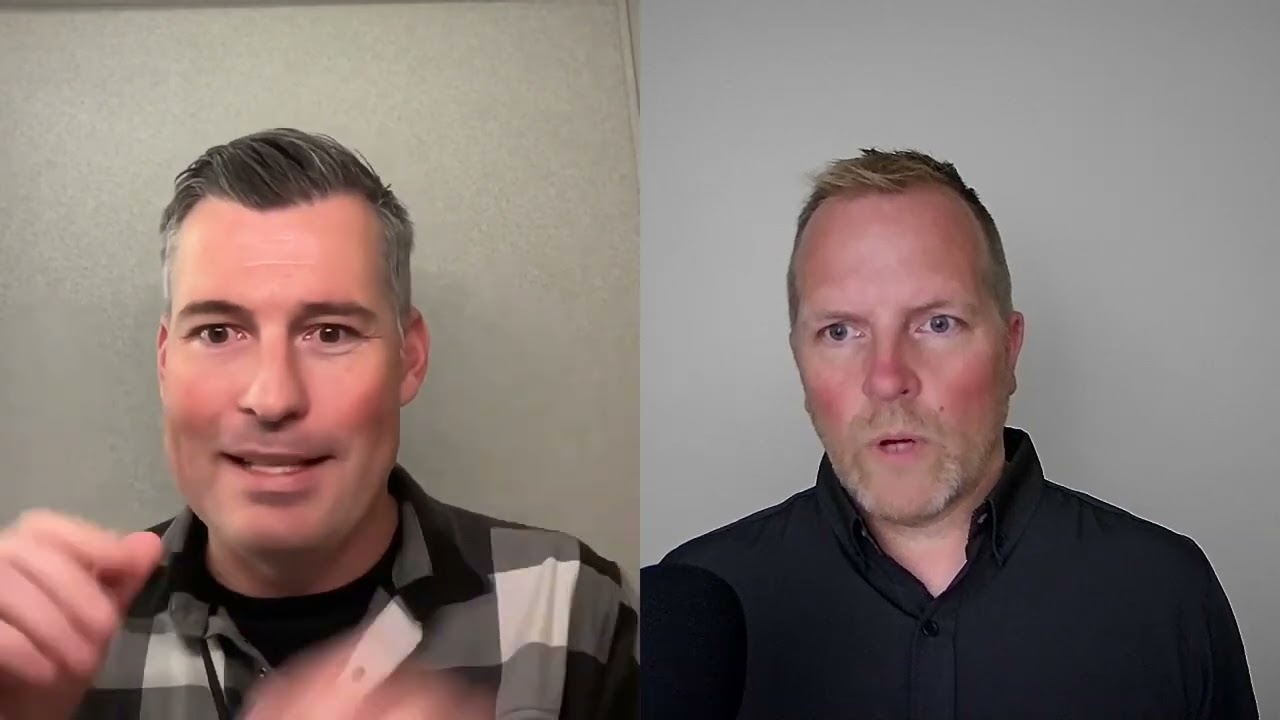
The OKR Advantage
OKRs as a low-overhead alignment tool: three to five quarterly objectives at the executive level that cascade as key results down through the org. The soccer analogy, the contrast with EOS big rocks, and how to actually roll them out.
About this episode
Josh and Lyndon unpack the OKR framework, Objectives and Key Results, as a simple, low-overhead approach to goal setting that creates alignment across an organization without becoming the kind of strategic plan that lives in a binder on a shelf. They reference John Doerr's book Measure What Matters and the free training videos at whatmatters.com, and contrast OKRs briefly with EOS-style big rocks. The framing throughout uses a soccer analogy: the objective is winning the league, the key results are the specific wins and player conditions required to get there.
The mechanics they describe: start at the executive level with three to five objectives per quarter (no more, that's the whole point), and let each layer below set their own key results that ladder up to those objectives. That bottom-up ownership is what generates buy-in. Lyndon hits the SMART framework for goal hygiene and pushes hard on stretching the team rather than setting low bars, while Josh flags the risk of unachievable goals causing teams to disengage entirely. They land on simplicity, transparency, measurability, and consistency as the framework's real benefits, and end with Josh's reframe: when goals aren't met, the problem is usually the process, not the people.
For anyone setting goals for the next quarter or trying to get a team aligned without a full EOS implementation, this is a workable primer.
Chapters
- 00:00:00 Intro: defining a goal with the soccer analogy
- 00:04:13 Ambitious vs achievable goals and the SMART framework
- 00:08:58 BHAGs and intro to OKRs vs EOS big rocks
- 00:11:32 Soccer analogy applied: objectives and key results in practice
- 00:13:57 Executive-level objective setting: three to five priorities
- 00:17:37 Cascading: how key results become next-level objectives
- 00:20:36 Implementation: ownership, training, and a facilitator
- 00:25:46 Resources: Measure What Matters and whatmatters.com
- 00:27:33 Takeaways: keep it simple, reflect quarterly, your team doesn't suck, your systems do
Tap any chapter to jump to that moment on YouTube.
Key moments
“You never set the bar low.”
“Shoot for the moon and you'll land amongst the Stars.”
“The fact that people are involved in generating their own key results that feed into the objectives is pretty key in getting that buy in.”
“The simpler it is the easier it is for the entire team to get behind it.”
“Your team doesn't suck your systems do.”
Your hosts

Joshua Leyenhorst
Founder of BasePoint CPA. Chartered Professional Accountant (CPA) and Certified Exit Planning Advisor (CEPA), helping business owners see the full picture of their numbers.
More About BasePoint CPA →
Lyndon Smith
Founder of Expansive EDGE. Two decades in projects and design across six continents, focused on operational leadership and continuous improvement for small and medium-sized businesses.
More About Expansive EDGE →
Full Transcript
Show transcript
Hide transcript
Auto-generated from the YouTube captions for this episode. Click any timestamp to jump to that moment in the video.
00:00 okay well welcome to the business growth factor where we have conversations about building better businesses uh I'm here with lynon Smith and uh myself I'm Josh Leyenhorst and uh yeah what are we talking about today lynon yeah so today's episode oh thanks for the introduction uh today's episode is around goal setting and uh we're we're going to dig into a couple of different well we're going to specifically dig into the okr framework but um and the value behind it so question yeah how would you define a
00:33 goal maybe just uh when we talk about goal settings put you on the spot here but how would we um yeah how would we Define a goal you are putting me on the spot here yes it's it's a Target right uh so I think the the easiest way to to to explain this if you don't have a Target imagine like a dartboard for example and you know where the bullseye is uh imagine that's your goal if you don't have that goal if your team don't have that goal uh and your dartboards aimed
01:06 in that direction and um you everybody's aiming in in the complete opposite direction uh you kind of want to have that goal in front of everyone so that they know what they're aiming towards right and um yeah I think it's really just uh how do I say it it's it's it's it's creating Clarity on on on what what the objective is for for the business for the team for um for for everyone and I mean why do we put goals in place it's it's really you know to to to gain Clarity and focus on on the items or the
01:41 objectives or the tasks activities that you should be focusing on to be able to achieve the goal it's uh think about a game of soccer right or football I think probably a better term I don't know you guys Ed in North America we call it soccer I suppose but yeah so you you've got goals right uh on either side of the field and and the team know that like hey we've got to make our way to the goal and and get the ball through through the you know the goals to score right and um you know that's that's kind of having that
02:12 goal in place you know gives you some direction on how to achieve or how to get there right that's awesome thanks backwards what's that otherwise you might be going backwards yeah right I think it's good to Define that because I think sometimes uh when people get into business they hear these terms that get kicked around no pun intended with the whole soccer thing but like you know they hear these terms that kind of float around and they're like what does that mean for business right and so I think that's was a good analogy even with the soccer uh idea of what a goal is like really your goal is to get that ball in
02:45 that net and so because sometimes I think even people start to get in the habit of going through motions in their business where it's like oh I just kicked the ball towards the net it's like no actually like yes that's your target yes you want to kick it towards the net but your go goal is actually to get it into the net so if they have a really good like net keeper or goalie whatever they call it in like South Africa um what's that a goalie a goalie okay so we're working on with the same language here you know if they have a really good goalie like then it becomes like okay well how do we get it around
03:17 him it's not just kicking it in a direction because I think sometimes yeah people set up a business they start going through motions there starts to be routine and Rhythm but it might not even necessarily be the most effective Rhythm for their business because maybe they're just kicking it at the goalie and not necessarily in an effective way to get it around anyways we're getting like way down into these analogies but I just thought it' be helpful talk about yeah I really love that and I think you know the the other part that that occurred to me while you're talking about that is um you got a team right and you got to leverage the team to to achieve those
03:49 goals and if the whole team knows what what the objective is what the goal is uh they can work collectively together they can collaborate and uh pass the ball to one another and and score a goal get past that goalie and and and score a goal so reach those objectives so yeah um I wonder you know speaking about goals when you're setting goals for for a business should we should we dive straight into that yeah well why don't we uh yeah let's talk about our first point here sort of you know in terms of
04:20 setting goals you know do you go like really ambitious do you sort of uh set the bar low just to get a guaranteed win like what are your thoughts on that you never set the bar low thanks for clarifying always you always want to stretch stretch yourself stretch your team and um you know like you want to you want to progress and if you're setting the bar low you're not you're never going to you know progress and you're never really going to truly find out what your team are capable of um but when setting those goals you want to be uh you want to use that smart framework
04:53 it's a pretty common framework for goal setting so specific you want to make sure that the goal is specific measurable achievable relevant so is it relevant to our business um you know growing or you um excelling and uh time bound so a lot of the times you know we can set a goal but you know if you think about the analogy of soccer again like you've got you know I think it was n 90 minutes per per game um that you you've got an opportunity to get like score in the goals so there's time attached to
05:27 that business we we we tend to like just set like something in place and we like we'll get it done we're working towards that goal but if you set the time for you know like every quarter you set new goals and the objective is to achieve that goal within the next quarter um then everybody's in in you know in in tune with that goal right so in the uh in the exit planning framework like in the sea framework we kind of call them 90day Sprints so you sort of have these quarters where you focus on specific goals and it's like a 90-day Sprint where you hit those few things and then
05:59 you either continue you know building off of that or move on to some some some new ones and it could be I mean different different context you know if you're doing some weekly um you know goal setting with your team so if this is at a departmental level or maybe you're a senior manager and you've got like a management layer below you you can have goals that you set for the week and you communicate those goals and you sort of recap and you know recalibrate to the end of the week see you know who met their goals um you know just kind of you know getting everybody on the same
06:31 same page but uh so you can have weekly goals yearly goals whatever that looks like but you know the the most common thing in business is uh let's take a look at those 90-day Sprints or those the quarterly planning and it gives you the opportunity to filter those goals down into the rest of the organization get everybody up to speed and you know like aiming towards the same go goal that same top right yeah and I guess maybe just to to dive into one more of those letters as well from that smart acronym there uh the achievable one I
07:04 think is pretty important also just to unpack a little bit because I've seen situations where organizations have set unachievable goals for their teams and it just seems to cause just as disenfranchisement if that's a word uh with the goal right you have these teams who are now no longer like they don't perceive it as something that they can even achieve they're like well if we can't do it what's the point in even shooting towards it right and so they just kind of abandoned and it all together for something that maybe makes more sense to them uh but then also you know getting to the earlier question you
07:36 said the bar low or you said high right like stretch yourself but you know so it's achievable but it's not necessarily a guaranteed win and I suppose you know the guaranteed wins are are nice in that they help you be like okay we achieved something we we like conquered something that's good maybe that can be a step towards that goal so now you're tracking more of those incremental steps so you can celebrate each guarant win I suppose if you want to call it that uh getting to that overall like that higher goal yeah 100% is a good old saying uh shoot for the moon and you'll land amongst the
08:10 Stars that's right yeah I think I saw that on a calendar once so aim high you know never never uh set the bar low I uh I I I don't want to say I disagree with uh you know like setting the bar low um yeah I understand what you're saying here make sure that the goals are achievable absolutely and you'll only know once you start stretch stretching or stress testing your team um what you can expect out of them and if you know you can they can achieve the goal uh you just you're there to to challenge them or support them like hey
08:42 how we tracking with this you know like where can I help you you know what's it going to take to get it done and and you're there to sort of quarterback them all the way through so that uh you know the business it's it's you know leveling up every single quarter yeah yeah okay so that kind of gets into the whole idea idea of like setting ambitious objectives so how do you sort of measure the progress then so you set like a goal right you set your target how do you measure that a great question and before I get into that I think there's there's a
09:14 bigger thing here that uh you know that uh that that I want to sort of bring up in terms of goal setting so as I mentioned you can do goal setting for like weekly quarterly annually and longterm um you always want to you always want to take a look at like what the end is what the end goal for for your for your um your business is for example that be hag I think it's uh Jim Collins that speaks about it in I think it's the book good to Great where he speaks about it the first time uh that big hairy audacious goals so like what
09:46 is it that you're really out to achieve and then you're breaking those goals up into shorter bite-sized chunks and you're progressing towards that that beag at the end of the day now to go back to the question like that um how do we measure it how do we how do we actually put a like what framework do we use to to you know to achieve those goals so there's a few that you that we can consider and I I can chat about a bunch of them but the the the um the one that I'd like to focus on specifically today is the okr framework U you do get like the EOS big rocks framework and a
10:19 bunch of others they're all kind of the same in a sense but um you like a little bit different so you know the results pretty pretty similar and the concept around it is pretty similar as well so the just to hop in like just to Define some terms so EOS as like the entrepreneurial operating system corre method and okrs what's what's that stand for for listeners okrs is objectives and key results and um the there's a book uh me uh measure What Matters by John derer um he he didn't designed the framework
10:54 but he speaks about that framework in the book and he shares a little bit about how Google and other large organizations have successfully implemented this and how it um how it's contributed to the success that they are today by using that uh that okr framework okay so objectives and key results uh I'm going to unpack that a little bit for us and then just uh you just speak around it uh you know just the values and and and what it really creates for your team so the objectives is think of that as your goal for the
11:27 quarter so you're setting a goal for the quarter quarter um maybe while we're going through this Lyon I wonder if like as you talk through it might be helpful to use the analogy of say like the soccer game right so it's like what's the goal what are maybe some of the what's what's the objective what are some of the key results just to tie it into the analogy so we can track it lovely yeah um so I mean an objective for a soccer team or foot you soccer team uh might be to win the um you know the the the league or
12:01 yeah I don't I don't follow soccer too closely as you could probably hear nor do I it could be to win the league right and then the key results would be they've got to win certain games um you know we've got to have our our star players you know in top form at certain times you know so there's there's certain key results and metrics that they need to to to consider and look at um and then if you drill that down you know into a lower level like the actual game day uh the objective would be to win the
12:35 game by let's say three three um points for example in order for us to move to the next level so I think a lot of that would sort of change on the fly but you know the the overarching goal would be to win the season or win the league or you know something along those lines right okay so maybe like yeah some of those key results are the indicators and I guess maybe there's the differentiation between like key results or key performance indicators but it would be like yeah have to certain win a certain number of games need to have certain number of of star players maybe
13:09 I'm not sure all the key success drivers of a soccer team but like um and so okay so those are some of the key results that need to be in place in order to meet that objective is sort of the idea there yeah well they they might need to win certain games at certain times um you that get them through to maybe the quarter finals the semifinals and then the finals okay um maybe they need to get certain amount of points in order to to get to those uh you know to those stages um it all depends on how they've structured I guess the uh the the league
13:43 or the The Knockouts or whatever that looks like right yeah okay and again I I you could probably hear the The Limited the expertise here yeah so um when we when we bring that into back into like a business for example um the the executive level is is where where you wanted to start so um you get your executive team in a room together and they start identifying three to five objectives you don't
14:15 really want to go more than that otherwise it's you're focusing on too many things right um and I I could probably challenge everybody on the call today and say you know write down uh all the things that you're focused on right now for for this next quarter if not doing quarterly planning or those 90day Sprints you're probably going to list out everything that you're busy with and you're going to have a list of like 10 or 15 things and um you haven't got time um you haven't sort of narrowed it down to like we need to be focusing on these three to five objectives in the next
14:47 quarter so you're focusing on everything but um you're also probably finding yourself procrastinating on everything because it's uh because there's so many things to focus on you don't know what uh what's the top priority so what you're things that sorry to interrupt there L but when you say things that you're working on are we talking like delivery of services and products are we talking about like the actual like actually things within the building of the business or a bit of everything right it could be um like our objective is to to increase our Revenue to you know five million a year or um
15:20 you know uh it could be to bring on another you know increase our Workforce by 10% you know um but when are we doing that like what what uh what is the greater overarching objective around that like what what uh what is it that we're really looking to achieve here and when you can get the executive team in a room together and you can Define what the priorities of the business are um for example like we're going to increase our Revenue uh by 15% in the next quarter and that's going to allow us to bring on an increase our Workforce by another you know 10 or 15% whatever the
15:53 the goal would be there um you know it's it's kind of things that have to happen sequentially and there's priorities now that are placed on certain um components uh and then those are objectives and then when you start unpacking those objectives well um in order for us to get our Revenue to 15% or increase it by 15% what are the key results that are are going to um you know that we're going to have to achieve in order to achieve that that objective and you can start unpacking that and and getting clearer on those details so um to to
16:27 increase our revenue and we had this conversation a couple of episodes back you want to increase your leads by a certain number right or you want to make sure that you're tracking your leads so that you know we got to increase leads by 30% because our conversion rate is only this amount and you know we we're going to bring on so many customers and that's going to help us bring our Revenue up to the the level that we want so understanding all those metrics and having that in place like I said based on the earlier um episode that we have uh you you're able to actually you know
17:00 set proper goals or objectives yeah and I like that those are very specific and very measurable so we got that SM part of smart going on there so that's good achievable I guess yeah and relevant I mean very relevant yeah really the relevance is also setting the priorities right so if you understand um what the priorities are uh it might be something that's relevant this quarter but not next quarter or might not be relevant this quarter it might only be relevant once we've got these other
17:33 mechanisms in place right yeah yeah okay so that's kind of talking about uh measuring how things are going as far as the the goals go um I I guess once you have say your objectives in place and then you have a list of key results and so what what you're saying based on this framework at least the okr framework is you're kind of looking at three to five key results that you should be focused on for that objective objective can those key results then become objectives for say another department or another uh another person
18:06 in the company absolutely yeah and and that's the the whole um you know the whole structure around it is you you get your executive executive level setting out their objectives and their key results those key results then inform the objectives for for the next management level um and then they would set up their their key results uh in line with those objectives which were the key results for the executive level right right and um and then you kind of sort of start filtering or drilling that down into the the rest of the
18:38 organization so so theoretically then the key results of all the different departments should all feed up towards the overall objectives of the company that way absolutely and and and what that creates is alignment you don't have a department working excellently at you know whatever they're doing um but there's no alignment in in terms of like the rest of the business so right you what you're want to do is break down those silos uh everybody's still working towards their objectives for their for their departments but it all kind of
19:10 ties in together with the the main objectives of the the organization so it creates uh I got a couple of notes Here it creates alignment so it gets uh everybody in in the business aligned not just everybody on your team but everybody in the business aligned creates transparency and and like this is what uh this is what we're working towards gets everybody focused on the right things so um you know we're talking about that list of maybe like 10 or 15 things that you might be working on our Focus needs to be on this because that's what uh it it ties in with our okrs our objectives and key results and
19:42 then measurability so um by having those key results in place you you can also start setting or tying in uh kpis for for your team members that are actually out there performing and executing the work and you can have those kpis for like each division as well right okay and then I guess it allows for sort of a quick checkin then too if you're were to check in with each department You' be like hey these are your key results that we're looking at you know are you on track with that right are you sort of like red level orange level green level in terms of you know if you wanted to dashboard that out get a little bit
20:15 nerdy in Excel or whatever right you can have some some color coding anyways to see like okay what are the areas that we actually need to focus on uh to to move this forward if there's any that are maybe falling behind or uh staying on track or whatever it might be yeah love that and and we love getting nerdy Josh that's uh that's what we that's what we do here yeah um I think the the other part of it is uh you know when when you when you're executing or implementing okrs in a company the um you want to you want to get it clear
20:48 at the executive level first but then when you start rolling it out into the rest of the business and the rest of the organization um you want to be so clear on on why you're doing this with your team so what value does it have for their department now you're breaking down these silos and there's you know a whole lot of transparency like what value does that create for the different departments in the company for the individuals themselves that now have to spend and invest some time in actually creating key results to tie in with those objectives right so so you're saying some of those key results are
21:20 driven at that level like in each department so it's not necessarily like a top down push it's more like hey here's some of your objectives you develop your key results department and so then there's maybe a bit more ownership that each department will have when it comes to those key results yeah you you hit the nail in the head there so when they're doing it themselves if you're just giving them like here's our vision or this is the objective this is what you what the goal is yeah um you you figure out how to get there and uh that's what you're paying them for right
21:52 they that's why you hire good people right they're the ones who are competent to figure that out yeah there's a whole lot of book that are just sort of joged through my head now like who not how good to Great there's a yeah yeah but it's it's it's those people that that are going to um set their own key results uh to ensure that they hitting those those objectives and all you're doing as a business owner or you know the executive team or leadership in the company is you know how do we support you or challenge you to to make sure that we hit these objectives awesome okay so in terms of
22:27 like implementation and sort of best practices linen like have you kind of seen some good ways to implement this or maybe it's recommended in the book or uh what are some thoughts there um I think the the immediate thing that that comes to mind in terms of implementation is is is get just get clear on your purpose right clear in the the the vision the why like um go to the the start with why Simon Sy start with why um and and communicate that with the team so what is the value again that they getting out of it we're getting alignment transp Arcy focus and measurability out of
23:01 having this framework in place um everybody's working on on the right thing and not just something and we're we're driving the business to you know to to to be successful um so there's an impact that they have in in the greater scheme of things rather than just coming to work and you know like this is what we're doing and not really know knowing why we're doing it but we're just working here but we're now when you have these clear goals and a vision like this is what we're going to be doing this is the the impact that it's going to have people are like yeah I can get behind
23:33 that I can you I can support that um and you start creating that culture where people are now contributing and uh you said it earlier just taking ownership of what they're creating because you know like we know what we're out to achieve and we're responsible we're accountable for for that uh result at the end of the day right when when you said doing the right things it just reminded me of a an interesting way of somebody I forget where I read this but they're just talking about you you can do the right things and you can do things the right way right and so the right things are like that's being effective and then
24:05 doing it the right way is being efficient so you want to make sure both of those are are happening at the same time but uh 100% but yeah so basically you want to get Buy in so you want people to see the overall benefit of doing it um I think the fact that people are involved in generating their own key results that feed into the objectives is pretty key uh in getting um getting that buy in too so I think it's also important to to have someone who's actually facilitating it so someone in in your in your leadership structure who's who's facilitating it and what I
24:38 mean by facilitating it is saying like all right making sure that the guys have got enough training and understanding and education around okrs um so that when they're developing their key results um you know and they're they're taking ownership of it that they truly understand the framework right right it's not an overly comple uh overly complex framework but when you when you start when you start to implement it in the business it starts to become a little bit tricky for for some people to wrap their heads around oh this has got to tie in with that and like just focus on where you are and you
25:13 know smashing that that objective that that has been allocated to your department division or team right so so a quarterback who can uh kind of take care of that part absolutely yeah and and and then also just making sure that you know like hey these guys are setting some key results are they really in line because maybe the the the leadership structure um at at a management level you know you you want to make sure that it's all sort of tying into the you know up the chain to to the the greater objectives of the company right okay and
25:46 so this whole framework is uh described in the book uh measure what matters from John derer correct yep okay awesome so that's a place somebody can go to to learn more about that as well yeah and if you're more of a visual learner um there's uh there's a website what matters.com they've got aoup training videos on there that you could uh that you could jump into awesome okay probably take you a couple hours just to rip through that and um and get clear well I don't even think it'll be an hour actually uh and then just watch those videos you can understand the framework
26:18 and um just learn how to implement that in either your team or in your business I mean you we're talking about this at a at a at an organ organizational level but um I mean if you're the person watching this is a manager or someone within a company there's nothing stopping you from you know setting okrs for your team getting and then sort of starting to push that up into the rest of the organization right it's a great idea yeah so it's not like you necessarily have to have a whole company buying into the process you can just adopt it as a a framework for your own Department that's a really good call
26:51 like that absolutely you know we we we look at it from a from a organization level because that's uh always you want to sort of break down but I mean if you wanted to implement that in your team and and just break down those silos in your team and create that alignment transparency focus and measurability um you can do inside your own team and then you know when people are like oh wow you guys are doing so well um you can start rolling that okr framework out into the rest of the business as well it's a great idea be the change you want to be right that's awesome yeah right Lon I
27:27 think uh that kind of takes us to about the half hour mark here uh any any takeaways at all from this or yeah I think a few things just to consider you know um if you don't know where you're going or you don't know where the destination is how do you know how to get there and and this is really what goal setting is all about it's uh I think you've used the analogy before with Google Maps and dynamic forecasting if you know where the destination is um you know and you can communicate that to your team they can sort of figure out how to get there
27:59 um you know they are your who and they can figure out how to get there and and you know if you're implementing this framework you can take that into consideration let them you know own their um their sort of okr you know goal setting um just make sure that they're clear on what that destination looks like yeah that's awesome yeah think my takeaway is uh just talking about this a little bit more with clients I think it's a pretty good framework to consider as far as goal set setting goes is not overly complicated I think you know getting back to what we were talking
28:31 about at the beginning I think when people think about goals and goal setting in the context of business sometimes it could be this real ethereal thing that's just like up in the sky you know people don't really know what the next steps are but there's a framework right you can just simply set some objectives identify three to five key results that would in like get you to that objective and then those are the things that you focus on that becomes your 90day Sprint nice and simple I like it and that's a you you want to keep it simple um and the the the simpler it is the uh the easier it is for for the
29:05 entire team to get behind it and get on board um you know I think there's there's so many of these Frameworks that are overly complex and people just lose interest because it's like I have no idea what's going on here you know yeah and to then get everybody on board with that it's uh yeah no this is too complex we're we're not going to follow it yeah right and then it just flops right or sometimes it becomes too complex you know because there's companies that'll spend a day or two two days going through like a mission and vision you know strategy session and uh then it ends up maybe on the wall or ends up in a binder somewhere or on the shared
29:38 Drive um but nobody really uses it to um move the company forward and so yeah good and simple and actionable I like it yeah and I think there's also consistency that needs to be considered here so um once you've done your 90-day Sprint or your quot planning you at the end of the quarter do a recap uh um you know do investigate like what do we do well what do we not do well what objectives did we achieve did we smash all of them or are there a couple that we need to kind of recalibrate and bring you know those objectives into the next
30:10 quarter so you're reflecting on what uh you know what the previous quarter looked like and you're using that information together with those priorities you know that behg and then like you know the steps that you're going to take to get there and all those things that you that you you kind of got mapped out there um your repr priori rep prioritizing did I say that right I think so yeah yeah that works prioritizing every quarter and um you're getting the next quarter quarterly plan together right for sure and then maybe you know topic for another time but like when you're revisiting the goals and how
30:43 things went you know how that's done is super important it's very I've seen it so often in organizations where comes a lot of finger pointing right oh you didn't do this you didn't get this done right but it's that differentiation between people and processes quite often when a targets not met it was the process it's not that people are showing up to work thinking how am I going to not achieve my targets right it's usually something procedural that needs to be addressed but we can probably dive into that it sounds sounds like another episode that we can dive into there so we can call that episode my team sucks
31:16 and then your team doesn't suck your systems do that's right yeah excellent Lyndon well thanks that was uh yeah very insightful and um some good actionable steps on this for sure yeah awesome thanks Josh thanks everybody for listening yeah yeah thanks everyone for listening and uh stay tuned for the next one
Never miss an episode
Get helpful business tips and a heads up when we release something new.