
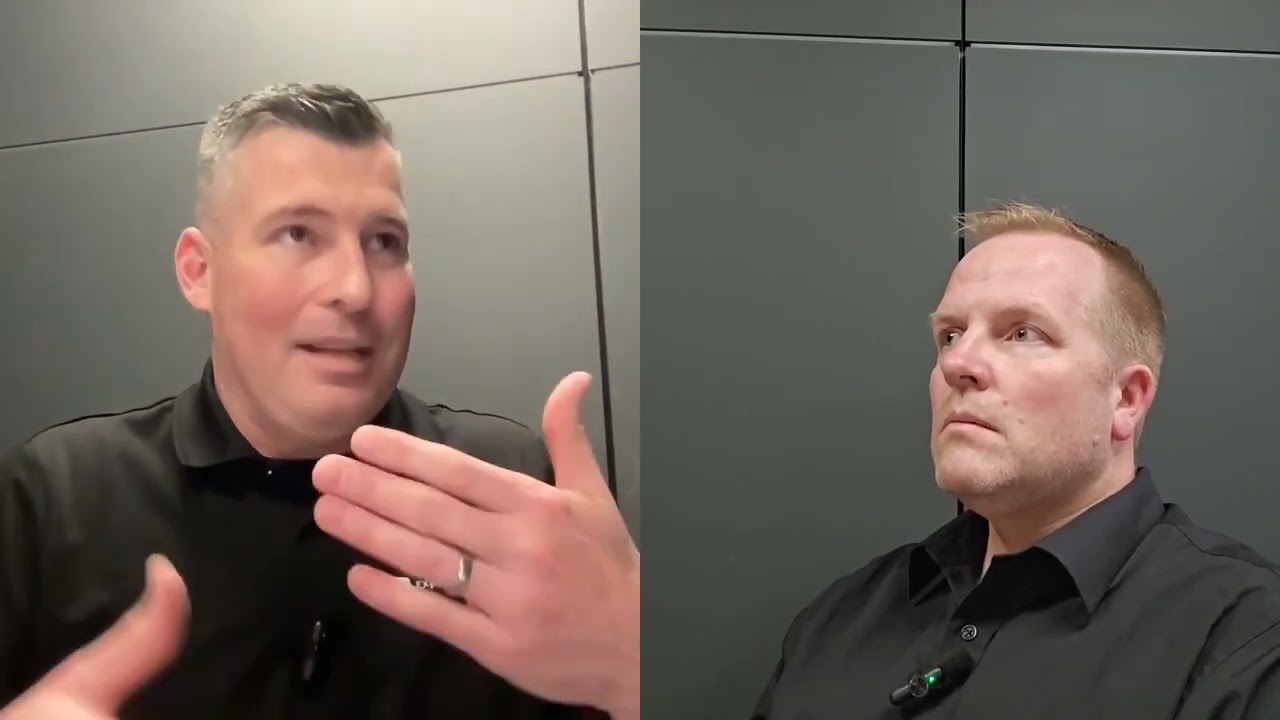
Focused Coaching
A short, in-person stinger walking through the six-step focus coaching approach, awareness, responsibility, knowledge, interference, committed action, support or challenge, for coaching team members through performance gaps.
About this episode
A short in-person episode (about six minutes) where Lyndon walks Josh through the focused coaching approach he uses when a team member isn't achieving a desired outcome. The six steps: create awareness of the issue and its implications, ask if they're willing to take responsibility for it, check whether they have the knowledge to address it, look for internal or external interference, get committed action, and close with how you can support or challenge them.
The framing is conversational and direct, this is a coaching tool you use with a direct report when a project is slipping or a deliverable is at risk. Lyndon hits the importance of asking empowering questions ("what's it going to take to get this done?" rather than "why aren't you getting this done?") and using the check-in as both support and accountability. The takeaway: a small, repeatable framework that turns vague "go figure it out" pressure into a conversation that actually moves the work forward.
Chapters
- 00:00:00 Intro and the six steps of focus coaching
- 00:01:02 Step 1: awareness of the issue and the implications
- 00:02:11 Steps 2 and 3: responsibility and knowledge
- 00:02:55 Step 4: interference, internal and external
- 00:04:08 Steps 5 and 6: committed action and support or challenge
- 00:05:27 Empowering questions and wrap-up
Tap any chapter to jump to that moment on YouTube.
Key moments
“You can't really coach them through how to do better if they're not even going to be taking responsibility for it.”
“You want to ask empowering questions. What's it going to take to get this done? How can we get this done? Not questions like never use the word why.”
“90% of the time they're going to say, no, I've got this. But you just want to reaffirm that you're available to support them.”
Your hosts

Joshua Leyenhorst
Founder of BasePoint CPA. Chartered Professional Accountant (CPA) and Certified Exit Planning Advisor (CEPA), helping business owners see the full picture of their numbers.
More About BasePoint CPA →
Lyndon Smith
Founder of Expansive EDGE. Two decades in projects and design across six continents, focused on operational leadership and continuous improvement for small and medium-sized businesses.
More About Expansive EDGE →
Full Transcript
Show transcript
Hide transcript
Auto-generated from the YouTube captions for this episode. Click any timestamp to jump to that moment in the video.
00:01 Hello, welcome to the business growth factor where we have conversations about building better businesses. My name is Josh Lionhorse and I'm joined here with Lyndon Smith and today we are talking about focus coaching and we're actually in person so I'm going to tilt this way and have a conversation with Lyndon in person. >> Yeah. So, hi everyone. Yeah. So, we're going to be chatting about focus coaching. Um, this is going to be a little stinger. So, quick and uh um a quick and to the point uh episode. So focus coaching think about uh where your team members or someone might not be
00:34 getting results or achieving a desired outcome in you know like in terms of work that needs to be completed um you can take a focus the co focus coaching approach with them. So the six six steps to focus coaching are awareness, responsibility, knowledge, interference, committed action and then support or challenge. So I'm going to run through that very quickly. I'm going to rip through that. We we don't have too much time here, but we really want to get this one out here. Um so awareness. So uh the the awareness very first step is hey um we've got a problem here or we're
01:08 not achieving this result. you're creating awareness around the issue and uh you're also creating awareness around like what are the implications um you know if we do not achieve this >> and and so this might be like in the context of like somebody and their direct report right so it might be >> uh like project director and project manager on a project or something right where it's like okay we're falling behind on something >> falling behind >> so now we need to coach through the process >> yeah falling behind maybe there's scope creep maybe there's uh you know some issue that's that's happening Yeah.
01:40 >> And then the implication is um you know that's going to impact our our project budget or um we're falling behind and and now all these other teams that are reliant on certain things or milestones from being for being like achieved um you know like that's going to push their deadlines out. It's going to push out other projects. So we need to create awareness that hey there's an issue here. We need to resolve it and if we haven't resolved it then um you like what are the implications? So create awareness around the issue and then the next step is uh you know create uh and
02:13 um ask them is this something that they are willing to take responsibility for. Sometimes they feel like it's not their responsibility or this is leadership's responsibility or someone else's responsibility but you want to create that it's their responsibility right >> and then um >> you can't really coach them through how to do better if they're not even going to be taking responsibility for it >> 100%. Step three, knowledge. make sure that they've got the knowledge to actually perform or execute the the task or the activity or you know address the challenge or the problem. So um ask them you like is you know do you have the you
02:47 know like through some questions you can ask them if they you can assess whether they actually know how to resolve the issue. Um step four check for interference. Interference there's two parts to it. So it could be external uh it could be you know like what's getting what can get in the way for you know getting the result. >> Well we've got a bunch of other projects on the on the line. I've got all these other deadlines that I'm looking at you know so and then you can coach them through that. >> Um you know it could be some things that are going on at home and you know like
03:19 that's something that they're bringing into the workspace. There could be some interference there. Um the other interference could be internal could be something around um you know not being a strong enough leader or not being able to you know command the authority that uh that's required to to get the result. you can coach them through that as well, >> right? >> Um >> it's good to distinguish between the two that that would be important to understand what it is and sometimes it might be a combination of >> could be dealing with a really difficult client, right? And uh that could be the interference is they don't know how, you know, like they're the client might be
03:52 very dominant and assertive >> um and really coming down hard on them and they just don't know how to deal with that. you know, it might not be their might be a personality conflict or clash. Um, and that's something that you can coach uh coach them through as well. >> Uh, step number five is committed action. So, once you've gone through this entire process, you you're um you're you're you're getting them to repeat to you what committed action that they're going to be taking and then uh they can tell you this is what I'm going to be doing going forward. Step number
04:25 six is you're going to ask them how can I support you or do you need and identify if they need to be challenged. So it could be you know you know would you like me to be there be present? Do you want to tag me in on the email and weigh in if necessary? Uh do you want me to do you need to go for some leadership training perhaps or um you in context of like looking at the project plans and the scheduling and all of that you need me to you know step in and look at that. 90% of the time they're gonna say, "No, I've got this." Um, but you just want to
04:57 reaffirm that you're available to support them. And >> nice way to end that conversation too, right? Is on a positive. You know, here's how I can help you. How can I do that? >> 100%. And then the challenge component of that is um you are we going to we've got the committed action. You say you're going to get it done by Friday. I'm going to check in with you on on Wednesday just to to make sure that we're sort of on the right track and we're, you know, we're >> moving it forward, right? Does that work for you? Yep. Cool. Let's uh let's rock and roll. And that's it. That's the focus coaching approach. Um something to
05:29 consider in this entire process is you want to ask empowering questions. So uh you know, what's it going to take to get this done? How can we get this done? Not questions like never use the word why in >> why aren't you getting this done? >> Yeah. Like why aren't you getting this done? We can have another conversation about that another time. Um, we've we're a bit uh strapped for time here, so we're going to wrap this one up uh right there. >> Short and sweet. >> Short and sweet for today or for this uh episode. I hope you got some value out of this. We'll uh produce a little template like a little cheat sheet that you can leverage and um yeah, I hope
06:02 this uh this helps in some way, shape, or form. >> Excellent. Thanks for tuning in. All right, cheers for now.
Never miss an episode
Get helpful business tips and a heads up when we release something new.