
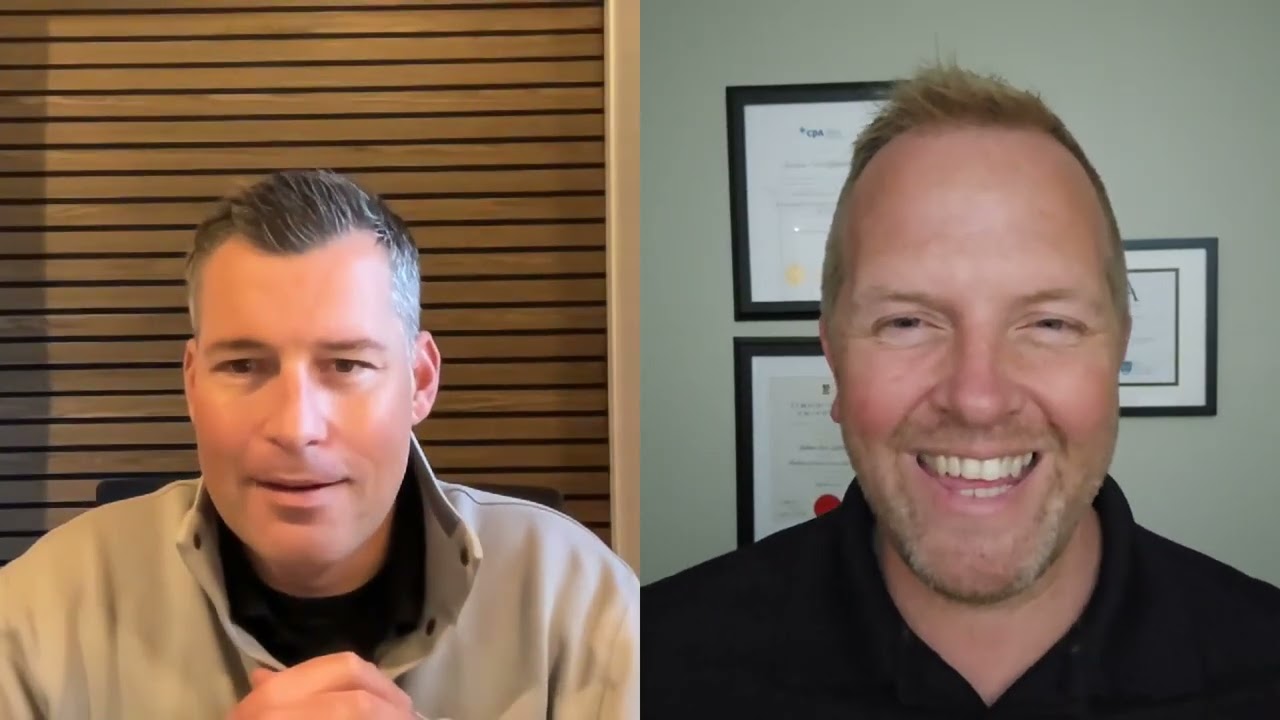
Meet Lyndon: An Expansive EDGE Conversation
Josh interviews Lyndon about Expansive EDGE, why codifying business knowledge into a playbook matters, the four-pillar framework (Profile, People, Policy, Process), and the ControlShift process for taking a business from chaos to control.
About this episode
Josh interviews Lyndon about Expansive EDGE and how the firm helps service-based businesses, particularly in the trades and construction, extract the institutional knowledge living in leaders' heads and codify it into a working business playbook. The why Lyndon opens with is direct: people should go home feeling fulfilled in their work, and that requires having access to the information they need to make decisions without waiting on a manager who's stuck in meetings.
The structure of the playbook itself runs on four pillars: Profile (vision, mission, values, brand standards, tech stack), People (org structure, accountabilities, role descriptions), Policy (HR, IT, cyber security, health and safety, environmental, the rules of the game), and Process (the actual how-to material for marketing, sales, operations, project management, admin, finance, with the playbook content scoped appropriately to each department). Lyndon then walks through ControlShift, the eight-stage methodology Expansive EDGE uses: Insights (gap analysis), Design (process worksheets, org structure, role definitions), Capture (structured interviews, video, audits of existing collateral), Codify (building it into a platform like Trainual or Whale), and four more change-management stages, Activate, Amplify, Refine, Oversight.
Practical takeaways throughout: use screen recordings (Loom) plus AI to draft SOPs from how you actually do the work; document at four hours a week (5-10% of your time) of working on the business rather than in it; small businesses under 10 employees should focus on sales and marketing first, but anyone scaling past 10-25 employees starts feeling the pain of undocumented systems. Lyndon's closing point lands the philosophy: continuous improvement compounds, 1% daily is 37x better at the end of the year.
Chapters
- 00:00:00 Intro and the why behind Expansive EDGE
- 00:02:30 What a business playbook actually is
- 00:04:50 The four pillars: Profile, People, Policy, Process
- 00:09:00 Tech recommendations and ControlShift introduction
- 00:09:50 ControlShift stages: Insights, Design, Capture, Codify
- 00:15:55 Mapping the full job lifecycle, not just departments
- 00:16:55 Activate, Amplify, Refine, Oversight: change management
- 00:20:23 Why everyone should be engaged in the playbook constantly
- 00:23:48 Cross-department touch points and definition of done
- 00:28:01 When does this engagement make sense? 10-50 employees
- 00:32:35 The Loom-plus-ChatGPT secret sauce for drafting SOPs
- 00:38:00 Where to start: core processes and 5-10% of your week
Tap any chapter to jump to that moment on YouTube.
Key moments
“My goal through the work that we do is for people to go home feeling fulfilled in what they're doing.”
“James Clear says, continuous habits. If you improve yourself 1% for a day, by the end of the year, you've improved yourself by 37 times as much.”
“If you can optimize the efficiency in various departments even by like 5, 10% and that compounds out, the impact to the bottom line is significant.”
“Evolution, not revolution.”
“5 to 10% of your week should be invested in developing and refining what you've got. That's also working on your business.”
Your hosts

Joshua Leyenhorst
Founder of BasePoint CPA. Chartered Professional Accountant (CPA) and Certified Exit Planning Advisor (CEPA), helping business owners see the full picture of their numbers.
More About BasePoint CPA →
Lyndon Smith
Founder of Expansive EDGE. Two decades in projects and design across six continents, focused on operational leadership and continuous improvement for small and medium-sized businesses.
More About Expansive EDGE →
Full Transcript
Show transcript
Hide transcript
Auto-generated from the YouTube captions for this episode. Click any timestamp to jump to that moment in the video.
00:01 All right, welcome everybody. Uh, welcome to the business growth factor where we have conversations about building better businesses. Uh, my name is Josh Lionhorse and I'm joined here with Linen Smith. And so today we're talking about systems and we're talking about operations and um codifying your your knowledge and your systems and your processes and um so maybe just by way of introduction Lynon because this is a little bit more about what you do in your business Expansive EDGE. maybe just do a bit of an intro as far as like what you do inexpensive edge and how that
00:34 works and then um we can dive into some of the specifics around um playbooks and codifying your your systems and processes from there. >> Sounds good. Thank you, Josh. Uh top of the morning everybody. It's uh Friday morning here when we're do while we're doing this recording. Um before I get into what it is that we do, I think I'll share a little bit more around why we do it. So, um, you you you've got a business likely or maybe you're an employee in a company and, uh, there's there's always, uh, my my goal through the work that we do
01:09 is for people to go home feeling fulfilled in what they're doing. And by being fulfilled, there's a component of having access to information and uh, freedom to make decisions and get things done. Uh there's nothing worse than, you know, sitting at your desk and you need to ask your manager or supervisor, your leadership a um a question and they're stuck in meetings the whole day and uh you simply just don't have the right direction to to make a good well-informed decision. And um so that's the reason why we do what we do is so
01:42 that we can you know empower people to to get things done and um go home feeling fulfilled like they actually made a difference in in their jobs, right? Um because it is it's frustrating. It's uh it's it's um demotivating, you know, it's like it it's just it yeah there's there's not a good feeling around when you just can't uh can't move forward on things. And um >> and as an employer, I mean, you want your team to be productive and to not be stuck and to be able to move forward. And >> nobody nobody goes to work thinking like how can I screw things up today or how
02:16 can I >> but uh so that's the the you know the the very high level why behind it. I mean there's a lot more uh to it but the the what that we do is we work with companies to codify their business knowledge. We build their business play playbooks. We take that institutional knowledge that the leaders have um that everybody relies on them for and we put that into a playbook so that their team can have a they have access to to that information. They can find the the single source of truth, the company standard, the information that they need
02:49 to to make progress and get things done. if the manager or someone pops off for vacation for a week or um they're, you know, they're out of action because they're sick or whatever, you know, let's say hit the they hit the metaphorical jackpot and, you know, they um they >> or get hit by the metaphorical bus. >> Yeah, let's go with a positive here. >> That's great. >> Um you know, what happens to all that knowledge that that person has when they when they're not around anymore? um or you know it's not available
03:22 >> and then who you like you just got to figure things out and you know fumble through I mean you've already invested your your business has already invested time into getting them up to speed training them you know figuring out the standards that they carry for the business why not codify that information why not put it into a place where everybody that needs to have access to it can access it um and that's really what we do is we we work with the teams and leadership teams to codify you know, best practices and really what makes their businesses great. >> Ask a question then, Lyndon. When you
03:55 say playbook, like what what does that what does that look like? Like for anybody who's maybe not even heard that term before, what does that that look like in terms of what they would have in their hands or available on their computer or whatever? I really appreciate that question because uh it's you know so so uh so much part of our world that uh you know I don't recognize that people wouldn't know what it would mean but it's effectively everything that uh all your company's um how-to information your standard operating procedures your work instructions your checklists your scripts templates um you
04:28 know all the all the the the data that essentially gets things done. So, um, you know, I think the the very easy way of looking at it is it's those SOPs at the end of the day. All those processes, it all gets captured into a playbook, the how-to on, um, getting things done essentially. >> So, it's a it's almost like a manual with all the supporting documentation and login information and all that stuff where it's like, if you want to run this business, here is the manual. >> Follow this, the business runs.
05:02 >> That's awesome. Okay. >> Yeah. and and we use it to onboard new hires. So, um you know, if we're taking a very sort of zoomed out approach to it, uh what it looks like is we've got four pillars. Um the first pillar is to your company profile. So, there we look at uh your vision, your mission, your values, your brand standards, what tech you're using, why you're using it. Um you know, like all of those sort of details when you're introducing someone to the company, that's uh that's what you want them to know. And then we take a look at the people side of it. So the
05:34 second P is people. This is um your org structure. Making sure that you've got an organization structure in place. Which role reports to which role? Um making sure that there's uh you know proper accountability. And then responsibilities for each of those roles clearly defined. Even if people wear more than one hat in a company, we need to make sure that the hats that they wear, those responsibilities are clearly defined so that uh you know the buck stops with someone essentially. Uh the third P is policy. So these are the rules of the game. So um HR policies, IT
06:07 policies, you know, cyber security policies, health and safety, environmental, um obviously depends on what type of business you're in, which types of policies or rules you need to um you that are governing your your operations. And then um the very last P is process. So people, sorry profile, people, policy, and process. The process side of things is uh is the really um the juicy side. So that's for um >> you know your lead generation processes.
06:39 So all your marketing processes will will live. So you develop a playbook for that. We build a sales playbook. So that's where all your you know how do you now you getting those leads? Are you doing the business development to bring the leads in? How do you start converting those leads? What's the steps um from you know inbound lead to closing a sale for example um and getting a signed contract depending again on the nature of your business. this um you know would be tailor made for your specific business. Then we take a look at operations project management. Each of these different um components or you know facets of your business have a
07:12 playbook administration. Uh we build up an employee playbook very similar to like an employee manual or an employee handbook. Um this is where you know we when we are onboarding a new hire we teach them you know how to u submit sub submit paid time off uh or submit an expense claim how to book paid time off you know they can access all the company benefits here they can access all that information that's relevant to them and it' be pretty much blanketed across the entire organization so it' be relevant for everybody in the company. So that'll
07:44 be your employee manual. Uh stuff like the finance playbook. Um you know only your finance people will have access to that. Um and maybe some uh management and leadership in the company. You obviously don't want your like ops people to have access to your finance playbook and um you know there's other sensitive areas like you wouldn't want your ops people to have access into your HR playbook. >> So we build all those different playbooks in the in the final P that final pillar that we're talking about. So that's why I said that's where the juicy stuff is. um where the bulk of the work is. But uh
08:16 >> so when you're going through that, just a quick question. Um you know, when you're talking about processes and like technology that kind of feeds into processes then as well. Um obviously, you know, you're going to have companies that are scaling up. You know, classic situation that we always bump into like in both of our businesses, right? Where you have people who are really good at what they do at the craft, right? Start a business and it starts growing. and of having a managed team and now it's more a management less uh you know working on the tools as as we typically would say um and so when but the the knowledge of different technology solutions that are
08:49 out there like when you're putting a playbook together for say like an HR process because you had mentioned like this is how you say submit time off requests whatever if somebody doesn't have a platform in place or technology in place uh you do you sort of have like a tool belt of of different options where you're like hey here's some technology technology options that work really well for a company of your size or for what you're trying to accomplish here. >> Absolutely. Yeah, we work with um a lot of different industries. Um but the you know like the there there are definitely some some tech solutions that we can um
09:22 suggest. Uh the the engagement is not about introducing the tech. uh like the engagement would typically be around you know codifying how you're currently doing it and then recognizing where those gaps are. So >> okay >> you know that's one of the reasons why we developed control shift and and we haven't really spoken about this yet but control shift is our process that we uh go through to take a business from chaos to control. That's the the control shift. >> Nice. >> It's like every business owner's dream. >> It's an eight-stage process. uh the
09:55 first four stages are really about um you know getting the right information and codifying that into a playbook. So um you know like that's the the the bulk of the work you um on the collecting and and you know we design capture codify and then the second um you know this last four stages of the the process is more about change management and optimization continuous improvement. So um just at a very high level we start with control shift insights. This is a
10:27 gap analysis. It's basically a report that we generate uh for our clients to um show them how to systematize their operations, what gaps exist in their company. Um we send them a questionnaire. We do a couple of contact sessions with them and then we um generate them a report for them. Typically takes about around four weeks to you know to go through this whole process. Um, next up is we go through the design process. Uh, we pull out some of these like worksheets and uh we identify like the top 10 to 15 core processes that uh the company might
11:00 have. Um, you know, really what what keeps the money flowing, what keeps like these are the critical processes that keep operations moving and and keep the business alive. Um so we codify we we identify what those are and we start um not codifying them yet but we build the u process worksheets for them so we understand what they are understand the highle steps that uh exist in there understand what media what collateral what um templates scripts questionnaires checklists uh support that process and um we just start documenting everything
11:32 we we identify who the process owners are who can support with the process how how frequently like how would you how would you how do we train people on the process? How frequently do we need to do that? So this uh these worksheets are just to kind of do the design stage that second stage that I was talking about is design. Um do some process mapping together with them to understand like the the you know from the start point to the the end point of the process. Um like what are the all the how does it flow? Um what does it look like you know what are the trigger decision points? Um >> so we we go through that in the design
12:06 stage. Um we also do the orc chart uh design. So we if they don't have an org structure we help them develop that. if they've got something. We take a look at you know is it based on the people that are in the company or are we looking at a proper functions or rolesbased org chart and then we uh we also take a look three to five years out like what are their goals you know what does this org chart look like um in the future and what roles are being fulfilled by and who are f who's fulfilling those roles um so that they can it can actually help
12:38 them inform what the next hiring um you know what position they're going to hire for next uh make sure that all the roles and responsibilities or the responsibilities rather have been documented. All the job descriptions are in place for each of those roles. And then um one thing I didn't mention is we do disk assessments on the insights uh side of it. I'm not going to get too deep into that. Stage three, that's where we start capturing all of the information. So now we know what we've got. We've designed a framework for the playbook. We've got a very um you know, good structure in place. Now we start
13:10 capturing the information because we know where it's going to go and what what we need to actually capture because that's uh that you know like we never really know what to capture. >> Um and then we start getting the the information. This is through sort of structured interviews. It's through um you know video recordings. It's you also just capturing what they've got in like doing a bit of an audit on their um their database and collecting the information identifying like which is the latest single source of truth. That's what we're going to go for. Nothing worse than having like four different uh templates. Totally all with the same name. You don't know which
13:44 one's the latest. So we identify like all of those and then we we when we go into the codification of that we build all of that into a playbook solution. So a software like train or whale and then um and then we actually put the the links to the latest documents inside there. That's single source of truth. So we make sure that they've got access to everything. The playbook also serves as a tool to inform how do we use uh our other softwares in their businesses. So you know this is for operations but you
14:16 might have an operations or project management software and your playbook will inform you on how to actually use that. So um you might be using Procore. This is how we use Procore. You might be using >> Microsoft Excel. um you know this is how we're using Microsoft Excel for this function right >> um >> it's a good idea so you don't get all these variations of how things are set up right I mean even you know a lot of contractors now are using uh job tread right you know how you have uh how you
14:48 set up your jobs you know and how that integrates in with your accounting system all these things make a make a really big difference and if you don't have a set standard process of how to do that it ends up being oh oops we set up that job that way we so now we have to do things a little bit differently in how we manage this project compared to this project simply because we didn't have a standardized process there right >> yeah 100% um you know so when we're doing that design stage we're we're actually actually mapping out the the life cycle of a job so uh from initiation through to you know close out
15:20 or fulfillment >> um you know so we we we map out like the marketing initiatives sales once you get the contract what's the you know what's the next steps you got to start up the job. So, you got to you got to start uh you got to build the project into whatever softwares you're using. You got to get cost set up. You've got to get um >> you know the the right people. You set up the project plan. You've you know, so there's different softwares that you need to activate or start working on. Um and you got to set those projects up in in there. And it's kind of like the I want to say the preconstruction phase uh
15:53 that we're looking at here. Mhm. >> And then, you know, you mobilize a team to sit like the next, you know, when they're on site, like what are their um what does that process look like? So, >> we get that like life cycle right up front and it's usually pretty high level. Uh we don't go too deep over there and then we start drilling down into each one of those processes and having their >> because you have like pro process and a subprocess and a subprocess. So, um you know the idea is to start very high level and then we can start looking at the granular stuff. Um >> okay. We make sure that we're looking at
16:25 the stuff that has the highest impact on the business first. >> Right. Yeah. >> And then um so I spoke about like insights which is the report uh design which is stage two where we're actually designing the structure and framework of the uh playbook. Um capture that's where we gathering the information. Codify is when we actually put the information into a solution together with your team. Um then that's the the the first like uh part of the engagement. The second part of the engagement is more change management. So
16:57 once you've got all that the the information and you're ready to rock and roll, you need to activate your team because that's a new software that you're leveraging. It's like >> another another tech solution that we've got here. It's like a a whole >> This is probably the most important one because it's actually going to tell them how to use all the other tech that you've got in your company. >> And then just activate like the vision behind it. Like this is what it does for you. This is how it empowers every one of you. So get everybody on the bus, get them trained on how to use it, how to access the information, how to download the app to their mobile device, how to
17:30 work through it and find information that they might be looking for. Um yeah and then we want to amplify what's working. So make sure that you're on anything that you want uh to have in place to scale your operations. So it might be your um hiring you like onboarding. So when you want to ramp things up quickly, you want to be able to get people up to speed really quickly. So we want to take a look at your onboarding and make sure that that's super like the the structure that you've got in there is good. you know, we we really make sure that we've got
18:01 like the the amp, you know, all the processes that going to help amplify your business, your operation. >> Um, we've got those dialed in and then we start uh creating more of a continuous improvement approach. So we start embedding um process champions or uh people who are kind of like accountable or take ownership of um you know like the the whole initiative and and they would run weekly sprints and make sure that uh you know the process owners of certain areas of the the the playbook. They're reviewing it. They're
18:33 getting feedback. You know this is where we start refining the playbook. You know like why are we doing this? Why do we have these steps? So this is where we start gathering feedback from the rest of the team and we start optimizing what we have inside there because it shouldn't just be like you know we've done it there's your file 13 this is something that your team should be engaged in constantly you know >> taking every morning taking something out of your out of your playbook um you know running it through spending 10 15 minutes uh with a team and saying before you sending off to the job sites running
19:06 through that and saying hey um let's all work through this, you know, like is this the best way doing this? Even if you're doing that once a week, I' I'd invite you to do it once a day. Um you know, if you can if you can set that kind of cadence up in your business, um James Clear says, you know, continuous habits. If you improve yourself 1% for a day, uh by the end of the year, you've improved yourself by 30 37 times as much. So >> that's the the goal is just, you know, that continuous improvement. And last so we at stage seven is refine um that you know continuous improvements very last
19:40 stage is oversight. So this is where we start looking at like your KPIs like key you know like the key performance all the metrics really that you you want to be tracking as a a leader or owner of your company um making sure that you got a a dashboard for that. So where can we pull the information? who's responsible for inputting those informations into or that information into um you know their respective areas and then just having a single source of truth that the um leaders can look at. So you know like we got uh 27 leads uh today we we converted
20:13 three of them you know like u you know like really good metrics that uh you know that keep keep the business moving forward >> and >> yeah that's the the control shift process the uh you know the framework that we operate within um do you find Lynon that when as you're working through this with with business owners do you get the oh I haven't thought about that before situations that come Yeah, the all the time. And I I think you know as soon as you start looking at your processes, the uh the immediate
20:46 thing is like you want to fix everything. >> And I'm not saying that that's the wrong approach, but uh you know, let's let's fix one thing at a time. Let's get it right. Get the let's get the um the consistency in what we're doing here. the systems thinking culture embedded into your team >> and we can start uh oh we need to get project management software awesome let's we can do that but let's first understand what your project management like your operations look like let's uh let's you know document all of that
21:19 before you go run off and go purchase the you know the the next software that uh >> because it is like you can I can share a whole lot of tech solutions with our clients and I can say all right you don't have a CRM uh you know let's look at you know these few few items over here but now that's a whole another project that they've got to run >> draws their focus to you know across two different areas and you know this is this is the hard work right this is the stuff that uh you know once it's in place it's awesome but it's not the sexy stuff like um you
21:54 know that you would that you get uh you know like it it doesn't become necessarily part of your dayto-day if if you haven't uh put that you haven't had the discipline to to action it out from the onset, right? >> But that said, I mean, if you think of it from like a compounding um efficiencies perspective, right? If you can optimize the efficiency in various departments even by like 5 10% and that compounds out. I mean the impact to the bottom line is significant, right? So there's a lot of value in making sure you understand how everything works in
22:26 your business and then like you say kind of revisiting it even, right? I mean uh there's there's value in doing that, right? Like like weekly basis. We used we used to do that even in department that I used to run a finance department where we didn't do it every week. It was the goal, but we'd pull up an SOP and be like, is this still working the way it should work? Is there anything that we need to tweak in this, right? And so it always just keeps things running smoothly and optimizing like say continuous improvement, right? It's kind of like evolution, not revolution, I suppose. It's like you're slowly like
22:58 evolving things to become better instead of like the fear that a lot of people have I suppose if they get into an engagement like this is like am I entering into a big system overhaul that's just going to like change our entire business and now I'm going to be paying for all this additional tech or processes like it's more just no let's just understand the process of your business and then how you can evolve it to continuously make it better. That's so perfect, you know, and I think um you got to you got to walk before you can run. And really what we're doing here is creating that discipline in documenting your your you know codifying your
23:32 knowledge. Um that's that's the walking right and then once you understand and you can because once it's been I mean once you've got all those thoughts and you know that information down you know and documented you can actually look at that critically and you can evaluate like what's the best way to go here you know that that shiny object software that we might have been looking at >> um >> might not be the best solution. we might need something that pairs finance with projects or
24:06 >> so when you're looking at it you zooming out and you're taking a look at the bigger picture you know when we when we go through these process design worksheets it says um who are who are the sub subject matter experts right who's who will help you document the these instructions um it's so important because you got to understand the touch points right so if you're like in sales for example as soon as you get awarded a new contract you're going to you're going to hand that over to um to finance, you're going to hand that over to projects. Um but you know, when you're when you're getting that
24:39 inbound lead, you're you're you're getting it from marketing essentially. So, you're going to bring everybody into um you know, that touches that process in some way to contribute to the development of your actual process. >> And >> then you're looking at it from the lens of the entire organization and not just in your silo like this. >> That's so important. And I think that's the biggest problem that a lot of organizations have is we're going to do our process um you know we're going to we're going to optimize our department. That means nothing if if you're not
25:11 tying it in with the rest of the business. You know your your department might be working like a welloiled machine, but you're not there just for your department. You're there for the greater good of like the what the business is >> and um you're you're like a piece of the puzzle or a gear in in the in the system, right? Like the in the gearbox in the transmission. So, >> you know, if if if if you're not connected to, you know, like if your gears are not meshing with the other part of the organization, you know, the engine's not going to run. >> You're going to be optimized for performance. And that's why you need to
25:42 dial everybody else in, you know, and and share like this is what our process is, like this is where we touch your your department, you know, this is where we touch your department, you know, have you got some feedback, you know, like why are we actually giving you this information? Um what is it for? What does it serve you? Let's understand that and that's where you know having these uh these workshops and meetings together with the clients really make a real difference is because see oh we've been doing it for them but they don't really need this information or like oh now I actually understand like the value
26:14 behind having you know this part of you know like the process you know handed over to to them over there. M probably helps avoid probably optimizes efficiency in that you're eliminating stuff that doesn't have to happen, right? Like nonvalue ad activities and probably also in that it probably starts to reduce rework, right? Because if you have uh something being done by one department that's upstream from another department and then they hand it off at some point, but it's not totally done. you know, it's going to bounce back to this department and then they got to, you know, there's like back and forth volleyball going on with certain things
26:47 and it's like, okay, definition of done in this department is this, right? Once that happens, nice handoff over to the next department. There's that kind of the idea there that you're helping codify that where it's like this is when it's ready to move on to the next stage. This is who is accountable to that. This is what the, you know, the triggers are. Next stage. >> Yeah. Um and and we're also through that entire uh you know like mapping everything out we can actually see who is responsible like who's accountable for this result. um you know if it's if it's a handover of of you know a package
27:21 from one department to another like um they're accountable for that package being complete accurate um you know so that the next department can run with it and be you know confident in like everything that we've received is uh we're going to run with that and if there's a mistake and we pick it up further down the line well we can go back to them and say hey you guys messed up here what uh what's going on is there you know is there an issue with the process with the system or uh did you just not follow protocol essentially, >> right? >> Yeah. And that that's another
27:54 conversation then. Yeah. >> Yeah. Right. Totally. Because now that's a people thing, right? There's a there's a process and there's a training and then there's the people who who execute. So just curious as we kind of get to the end here, Lynon, um what what types of businesses would best benefit from um like an engagement like this, like actually going through and creating a playbook? cuz I you know you you maybe on one end you've got like we always call them clipboard Joe, right? Like individual person who's kind of doing uh their business all on their own. They're the ones on the tools kind of doing everything. Um they probably have it all
28:26 in their head, right? Um and then on the far end you've got like a fairly large enterprise uh you know multiple departments um a lot of systems already in place. So within that spectrum uh or maybe throughout what would you say would be a business that could really benefit from this? I think uh you know if you're under 10 employees um focus on sales and marketing and just getting the work um you know and then you know delegating it uh you can start building your own systems absolutely um
29:00 >> you know I think uh you know there's definitely some education that we can share with the smaller smaller companies in that respect um you know as soon as you've got multiple crews and uh you've you've got more like teams to manage, more departments to manage. And it's usually when you start tipping over from like 10 or more employees that you've got uh these, you know, teams to manage, excuse me. Uh that's where you're going to get value out of um you starting to codify
29:33 uh really what makes your your your operations and your business great, you know, the the good stuff. So, and that's also uh where you know you're going to get a better return on on your time. So, like I say, I mean, if you're under 10 employees, just focus on your sales and marketing. You know, bringing in more revenue because that revenue is going to empower you to bring on more people. That people is going to that's where your your problems are going to come in. So you don't have to have like a super solid foundation for 10 people, but when you start getting to like the 50 or 100
30:05 employees, you want to make sure that you you've solidified a lot of that uh that like foundation because >> otherwise I guess scaling in efficiency, right? >> Absolutely. So you know, if you're you're tipping over to like you know, 10 or more employees, start looking at it definitely. >> Okay. Um, you know, I think the the sweet spot for for it is, you know, you know, 25 25 employees definitely um once you start getting to, you know, 50 to 100 employees, you're feeling the pain.
30:38 Okay. So, if if you have less than 10 employees, but you know, you had mentioned I think you said like chaos to control, right? So, as a business owner, it's like, okay, well, I've got five employees, but things are really busy, things are crazy. I feel like there's chaos. I want control. Could they still benefit from something like this? >> Absolutely. Yeah. >> Okay. >> And I think it's it's more taking uh, you know, blocking out and being intentional with their time to to start working through, you know, just putting things in place. And you don't
31:12 necessarily have to have a um, you know, a digital playbook for your team. you can actually just start codifying that information into like a a Google drive or a one drive. The problem is when your team starts getting bigger, people need to be able to find that information easily. And if it's scattered all over a Google drive, that's when it starts becoming an issue. You know, templates, um, you know, how to procedures, different departments start saving things in different locations. That's why the central knowledge hub when, uh, when your team
31:45 starts scaling. So, um, yes, absolutely. I mean, even if you're a soloreneur, start documenting your process, like your how-to information. This is how to because this is my recipe for success, right? This is how I'm successful at what I'm doing as a soloreneur. And then when you start hiring, you know, bringing on those first hires, it might even just be a virtual assistant for 20 hours a week. They've at least got a process to follow. You come up to speed relatively quickly. um you don't have to invest a whole lot of time into them, you know, just um ma micromanaging them.
32:19 They can you can just be like this is this is a process to follow. Um these are the results that we're looking for. Off you go. And you can just uh you can just measure like what really matters there. You can just uh you don't have to micromanage it, but you can measure what matters. >> Yeah. I guess even uh a nice quick hack for anyone who's kind of looking for a good starting point too is and I think we've talked about this together as well like if you use a platform like Loom where you can do a video walkthrough of how to do something it creates a transcript of what you say in the video
32:51 you can take the transcript you can throw that into chat GPT and say give me an SOP or standard operating procedure for this and then by filming how to do what you're doing you now have a video um training resource for somebody And then you also have a nice written SOP. I mean, obviously read through it, vet it. Don't just take everything Chat GB gives you as being done, but like go through it, but then you've got these two things ready to go, too, right? As a starting point for anybody who's maybe not doing any of this. It's like the next step on the road to really good systems uh
33:24 before you then start getting into putting together a full playbook. >> Yeah. No, that's uh that's one of our favorite uh sort of tech hacks or I don't even know if hack's the right word there, but uh it's like our secret sauce is uh you know like exactly what you've said and you can use Loom any screen recording. You just want to make sure that you're talking through the process in the screen recording. Um, and then when you when you extract that uh that transcript and you plug it into GPT, you want to prompt it uh with, you know, um
33:58 you want to give it a really good prompt. And not an SOP. It might just be a work instruction. It might be um yeah, it could be anything that's uh you like procedural, but uh or instructional rather. So you might just say you're a worldclass uh you know whatever the job function is um I want you to generate a standard operating procedure leveraging the transcript below and then uh it'll it'll turn something off for you. Really awesome. And you can even you can even
34:31 give it some context, right? Like this is our business. This is uh you know like what we do. Um you know this is uh you know when we're out in the field and we're doing a specific uh job. um you know here's a transcript for the procedure um you know leverage this information to generate a standard operating procedure or a work instruction uh whatever it is that you're looking for chat chat GPT is your friend it's >> I was going to say that Lynon sorry sorry to jump in there I was just
35:03 thinking like even if you're not doing a screen walk through with something like Loom or whatever it might be you can still just talk through the procedure right instead of because I If if someone were to sit down and have to start being like, "Okay, step one," and you start thinking through it, you maybe even lose the momentum. But if you just kind of freestyle a walk through, just talk through the process, right? When I go to site, this is what we do. This is who I connect with first. These are the things we make sure are done. Um, you know, safety items and just kind of talk through it. You've got the transcript. And then do as you say, like prompt
35:35 catching to put together the the procedure. So, uh, we're one of those companies where we when we jump on a a call with you, um, online call, we've got one of those notetakers in the back there. The reason we have got those notetakers is, uh, you know, sometimes we're having a call, we're going to be saying like, "Talk me through the process." >> Oh, okay. Interesting. >> And, um, you know, when we're done with a call, you've just given me that information once. Now, I can go into that uh, that transcript that we've got there, and I can extract that information. I can say, "This is what the client's given us. generate an SOP
36:08 work instruction. Um, >> yeah, this is the information that uh we've got here. So, it just makes it a whole lot easier to um to start capturing the right information. Um, and then when we're codifying it, all it it takes is for the client to review it and say, um, that's awesome. How did you get all of this from uh, you know, from that one conversation that we had? It's like uh that's our our uh our magic, our secret source. >> Yeah. >> Well, that's interesting. And just to maybe like drill it down to just a a typical everyday example, like when
36:41 you're barbecuing hamburgers, for example, like you need to kind of have a system to do it properly, right? You want to make sure the grill is clean, right? You want to make sure you put them you flip them at the right time. They got to be just at 160. You don't want them too hot, otherwise they dry out, right? And so all these things, if you have the steps in place, you'll have some pretty awesome barbecued hamburgers when you're done, right? But if you don't do those steps, you're going to have gross stuff on the hamburgers. it's going to be overly dry or whatever it might be. And then and so you don't want to have that with your business, right? You want to have a really good business where it's good experience for the
37:12 clients. Uh it works well and it's ultimately profitable. And so understanding those steps in each of those departments all along the way is super important uh to having a really good business. So thanks Lynon. This is very helpful. Anything else you want to kind of add before we wrap up here? >> Um yeah, I think uh you know like a lot of companies uh you know struggle with where to start. Um, you know, I think, uh, you know, if you're just walking away from this call today, if you don't know where to start, just pick out like your top like your core processes. So, take a look at the like your customer
37:46 journey. So, what are you what are you doing? What are the processes involved in generating a lead? You're bringing that uh that lead into your company. What are you doing to convert that lead? So, your marketing process, your sales process. Um, you know, and then take a look at, you know, how you're getting them set up. How do you how do you fulfill the job? You know, what's your close out process? So, uh just take a look at the very high level um you know areas and then like that uh customer journey essentially and then write that down. So, we've got a a sales process, you know, and then what is the triggers,
38:17 the start and finish uh triggers and if if you guys, you know, like if you want some worksheets or something, you want some information, we're not attached, like this is not like it's our proprietary, like we've got it branded, but uh if you want them, they're yours. If you just want to do some of the stuff for yourself, um I I'll give that stuff away. That's uh you know, like awesome. >> Here to support you where we can. >> That's awesome. Yeah. Thanks, Lon. >> So, that's a great place to start. um play around with tools like Lucid Charts or Vizio and and get familiar on how to do some process mapping. Um and then
38:51 definitely jump into AI. Um you know, like Josh mentioned, go go sit and talk through a process and let it generate an SOP for you. Um you know, if you if you want to build out a checklist, uh say, I'm building out a checklist for the following. These are some of the items that I currently have. You know, is there anything that I'm missing? you like have that conversation and you can start building like a pretty comprehensive structure in place. >> Put it in like just documents you know just uh like a Google doc or a word doc um um you know spreadsheets start
39:27 keeping like track of like what you have all that collateral it is going to get a lot and big and bulky and that's when you need to start moving that data into into a playbook. A lot of people are like how much uh you like how much time should be I I should I be investing in um you know in developing procedures. I say like probably 5 to 10% of your week should be um you know in invested in developing and refining what you've got. And >> you know that's >> also working on your business right >> two to four hours a week you know find two two time blocks in your week where
40:00 you're um you're building what you have and refining or building you know what you do and refining what you have >> in uh in that um respect. So it's it's like less than 10%. You and the rest of the time you can you can do the fulfillment, you can do the market, the sales, you know, the business development, but this is really, like you say, working on your business. This is where you're going to get uh this is where you're going to get a business that's scalable. >> Yeah. Excellent, Lynon. Well, thanks very much. It's very helpful. Super
40:32 important topic. uh so people know how their business runs and uh and again can continuously improve it which is super important especially for people looking to grow and scale their businesses which is what we talk about here on the business growth factor. So thanks again uh thanks for everyone who joined us and uh we'll talk to you next time. >> Appreciate it. Thank you everyone.
Never miss an episode
Get helpful business tips and a heads up when we release something new.