
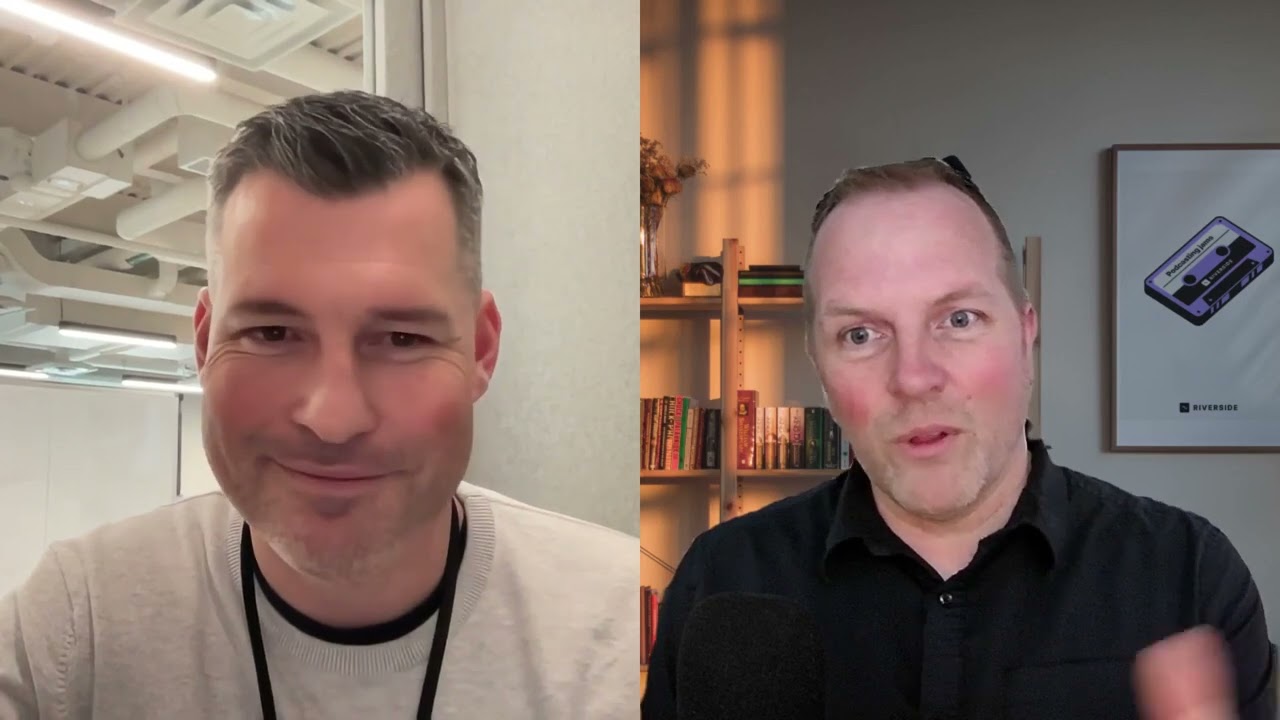
Efficiency, Workflow and Profitability
Increasing profit by tightening operational efficiency, the hidden costs of broken systems, why standardization and documentation matter, and how small workflow tweaks compound into bottom-line impact.
About this episode
Josh and Lyndon dig into the part of profitability that doesn't show up cleanly on the income statement: the operational efficiencies (and inefficiencies) that quietly erode margin. The framing they use comes from a sticky note a colleague left on Lyndon's desk, systems are perfectly designed for the results you're getting. If results are poor, the systems are poor.
The conversation gets concrete with construction examples: a project coordinator who skips the subcontractor intake step (insurance, WCB, contract) creates a chain of held-up payments, frustrated trades, and escalations that pull in finance, project managers, and leadership, all of which sits in COGS as wages but tells no story of why utilization dropped. Late payment habits get priced into future quotes by your subs, eroding gross margin further. Lyndon's argument throughout: anything repeatable should be documented, ideally with quick screen recordings rather than blocked-out documentation time. Josh's takeaway is a tactical tip he learned from Lyndon, Loom's variable feature lets you record one training video and swap a name across versions in your own voice, turning a 10-minute video into a generic asset. They land on the broader case for a systems culture: you can't optimize what isn't documented, and even imperfect documentation beats institutional knowledge that walks out the door when an employee leaves.
For owners whose teams keep duplicating effort, missing handoffs, or interrupting each other for the same questions, this episode reframes process documentation as one of the highest-ROI things you can spend time on.
Chapters
- 00:00:00 Intro: increasing profit through operational efficiency
- 00:03:00 Systems are perfectly designed for the results you're getting
- 00:04:38 The project intake example: WCB, insurance, subcontracts
- 00:10:50 Slow-pay clients and how trades price you accordingly
- 00:12:02 Transparency, clarity, communication and breaking down silos
- 00:13:53 How a business playbook codifies the company standard
- 00:18:00 Screen recordings as a fast way to document
- 00:22:35 Loom variables: one training video, swap names with AI
- 00:25:30 Onboarding, retention, and the real cost of turnover
- 00:32:50 Takeaways: build a systems culture, start with documentation
Tap any chapter to jump to that moment on YouTube.
Key moments
“Systems are perfectly designed for the results you're getting.”
“When more people get involved in things that they need to be involved in, it means they're not doing things they should be doing which means productivity decreases which means profit decreases.”
“If you can pay your trades quickly and have low friction, then their pricing will probably be you'll be a preferential customer or client for them to be working with.”
“If you hire somebody new, you should expect in addition to their salary at least $5,000 in additional costs just related to low productivity, training time, errors.”
“You can't optimize anything that hasn't been documented.”
Your hosts

Joshua Leyenhorst
Founder of BasePoint CPA. Chartered Professional Accountant (CPA) and Certified Exit Planning Advisor (CEPA), helping business owners see the full picture of their numbers.
More About BasePoint CPA →
Lyndon Smith
Founder of Expansive EDGE. Two decades in projects and design across six continents, focused on operational leadership and continuous improvement for small and medium-sized businesses.
More About Expansive EDGE →
Full Transcript
Show transcript
Hide transcript
Auto-generated from the YouTube captions for this episode. Click any timestamp to jump to that moment in the video.
00:01 All right, everybody. Welcome to the business growth factor where we talk about building better businesses, having conversations about that. And so, uh, my name is Josh Lionhorst, and I'm here joined, uh, by Lynen Smith. Um, want to just do a quick intro, Lyndon. Uh, yeah, sure. My name is Lynon Smith. I got a company called Expansive EDGE. We work with small mediumsiz businesses in the trades and we help them document their company's knowledge and processes and we create a a business playbook for them so that their entire business can uh effectively
00:35 run on information and knowledge. Awesome. Yeah. I feel like as we're talking about systems today and business processes, I'm realizing I don't even have a system for introducing what it is that we do in our business. So we also kind of talked about oneliners and I suppose Google maps for business from a financial perspective is uh maybe the best way to summarize it. So yeah, so Google map for for uh for business uh for finances in business, right? That's
01:10 right. Yeah. Correct. Love it. Yeah. Pretty cool. All right. So today's conversation, I think you mentioned uh increasing profit through optimizing operations. Yeah. And so, um, yeah, I guess what we wanted to talk about a little bit today was, you know, when we're talking about finding ways for profitability and finding finding ways to become more profitable in the business. Um, a lot of times, you know, you'll look at your income statement, see where costs might be higher, uh, where you can maybe, you know, because profit is driven by your revenues and your your cost, right? I
01:42 mean, the difference between the two is your profit. So, if you can pump up your revenues, you can decrease your cost, you're going to pump up your bottom line, you're going to pump up your profit. But there's things within your income statement that um may not be overly apparent and it comes down to operate operational efficiencies. And I guess that's the thing that we kind of wanted to dive into a little bit here. Um and this is a little bit more in your wheelhouse, Lyndon. And I suppose um this might be putting you on the spot, but you've probably seen some uh horrendous operational efficiency situations in your time. Not sure if you
02:15 want to uh without saying names or I wouldn't say horrendous but uh I think it's pretty normal in in companies that uh you know that are growing um you know they they they're not focused on standardizing things. So there's a lot of inefficiencies that that kind of creep in over the months or years. And um yeah, it just never really gets tackled or dealt with. And yeah, and that's what this conversation is all about is what are some of those inefficiencies and uh how are they eroding your profits at the end of the day? How can we um you know how can you
02:48 explore that and how can you actually maximize your profitability through um you know improving your operations and so a lot of this I guess like comes down to systems right and um you know we probably all kind of heard the adage if you have to do something more than once build a system for it right there's a really good book called working the system by somebody named Sam Carpenter that uh I remember reading years ago that really helped me as far as like understanding systems and the important importance of having systems in uh business. And so yeah, like if you have to do something more than once,
03:21 then build a system for it. If you have to build something more than once, then build a template for it, right? So the next time you sort of have to do it, uh it's just that much quicker and more straightforward. Um yeah, go ahead. Anything that's repeatable, anything that you're doing more than once, um where there's some repeatability in it, create a system for it documented. Um, sorry. I know I look a little bit distracted here, but I uh I I had a colleague of mine come up to me uh at my desk earlier today and uh he stuck this note on my desk. I don't know if you'll
03:54 be able to read it there, but it says systems, sorry, systems are perfectly designed for the results you're getting. So implying that whatever results you're getting, that's uh that's based on the system that you've designed in your uh I thought it was really cool. So, I took a photo of it and it sits here. I might even put it in our email uh just like at the bottom of our email signature. So, so basically it's saying if uh there's no results as far as uh good processes probably because there's no systems in place to begin. Yeah. Yeah. If you've got poor results, you probably
04:26 have poor systems. So, um yeah. Um part of uh what what I was hoping to uh cover today in in the conversation is just developing your business's operating system. And um you know there's so many parts of that and we you know before jumping on the call here Josh uh you we're talking about you know project managers, project coordinators and um you had a bit of a you elaborated a bit on how um you know how that looks. I don't know if you can maybe dive into that a bit more and then we can sort of
04:57 unpack that together. Yeah and I guess this gets down to the overarching idea again of like in your business like think of your business like a machine, right? Right? And the machine's going to operate in certain ways, got different parts that should move in a certain direction, right? So, if all of a sudden, say you have a belt tensioner in your motor that's a little bit loose, you're, you know, belts going to be flopping around a little bit more than it should, it's going to wear out. It's going to break down. Something's going not going to work properly. And so, you want to keep these things uh nice and tight. And so probably yeah, if what I think you're referring to was uh just
05:29 like processes for example in um uh in construction. So say say you're starting a new project um and you have an intake process, right? So uh starting a new project, you're setting it up and so with all your subs like, hey, we need to make sure they sign off on a subcontract. We need to make sure that they have their insurance, right? That they have their workers compensation uh WCB. And so those are sort of like the steps that are going to happen at the beginning of every project. And so if they don't end up happening, um then you're well, I guess two things to
06:01 consider in this. One is you're going to have these steps that have to happen for all projects, right? And so you need to keep in mind that if you have like 50 projects over the course of the year, like a whole bunch of smaller ones, or maybe you've got just like 10 really large ones over the course of the year, those activities still have to happen. And so just recognizing the potential impact of volume on your business. And so then you want to make sure those processes are really dialed in um and and efficient, but then also recognize the potential for issues when you don't
06:35 follow those systems or those processes. I'm not sure if this is what you're getting at is the Absolutely. Yeah. So if there's no system to follow and your your PC or project coordinator or project manager have missed some steps can that up later down the down the uh down the line what impact does that have on your team on uh productivity on your time um you know how much time are you then like spending not even investing because that's not the right term here but how much time are you spending to to rectify or remedy those issues because your system had some some it wasn't
07:10 there or it it uh it wasn't uh didn't encompass everything that needed to be complete or that your team weren't necessarily following the the protocol that had been defined for them. So you mentioned that like WCB, you know, there's there's some things where um you know, clients maybe or um subtrades, you know, contractors don't get paid because you don't have these things in place or you don't get paid and you can't pay your subcontractors. Um you know, so there's certain components there, mechanisms that if if that happens now, you've got to rectify this. You've got
07:43 to get the finance team involved. You got to get the project manager involved. you've got to have these conversations together with you know the vendors, suppliers, um contractors, whoever it is um as well as your client to actually resolve this and how much time is that taking away from everyone and actually how much is that actually costing your business in bigger broader you know Sure things here. So yeah, it's a classic example that happens, right? I mean, you think of like say uh general contractor ABC, right? That's, you know, their process is yes, make sure with a new project, all of our trades have their
08:15 their contract signed and insurance and WCB, all this stuff. And so if you maybe have a project coordinator who's like, "Ah, yeah, we're busy. You're not going to bother with that. I'll do that later." But then they forget because you you can't keep these things in your mind. You'll forget, right? Um, so then when it comes time to paying the the subcontractors, it's like, oh, okay, well, they don't have their uh WCB or they don't have their insurance, so we can't issue a check yet. And often times what ends up happening, partly because maybe not all GCs have good systems in place even for this, is the trade isn't necessarily notified, right? Because
08:48 there's a stack of checks sitting somewhere or some EFTs were like scheduled, but they weren't included. And it's like, we'll let them know, but we're busy with other stuff, so now they don't know. So then like a week or two goes by and they're like, "Where's our payment?" It's like, "Oh, well, you didn't have your certificate of insurance." And it's like, "Well, why didn't you let me know?" And all of a sudden things start escalating and maybe, you know, maybe it's an electrical contractor that's got a whole bunch of equipment or or materials that they have on site or like an HVAC contractor, right? So there's all this like rooftop equipment that they now have that their uh you know, vendor is
09:21 like, "We need to get paid. Like what's going on?" And so you have these chains of payment that are now being held up. So then now there's like threats of leaning the job or whatever and things just escalate and more people have to get involved. And so if you look at like your income statement, you're like, "Yes, our project coordinators maybe have like five PCs uh at our company and they all kind of sit typically in cost of goods sold some some overhead admin time in the GNA part of the income statement, but within that line item in the cost of goods sold, just recognizing there's stories happening in there that
09:53 aren't necessarily the best stories." And Maybe other people have gotten involved and uh when more people get involved in things that they need to then they need to be involved in it means they're not doing things they should be doing which means productivity decreases which means profit decreases and that's kind of what it comes down to at the end of the day is right trying to maximize profit for the efforts that we're putting in in our business. And so you want to make sure it's it's systematized so that the work that's being done is efficient and so that we're not unnecessarily involving others
10:26 in an inefficient manner. And I think there's also something to be said about uh how it erodess your culture um internally and how it erodess the relationships with your with your trades that you're working with and with your client. You know, it starts uh you know like oh you haven't got this done. you know, like now you're you're wasting our time, you're wasting your time, and you're wasting your sub's time. U there's there's a lot to consider there. So, well, the other thing to consider, too, is for example, and I've seen this um is where if you have um you know, clients that take a long time to pay.
11:02 For example, say there's a GC that that does fair amount of work for a particular client. Um and say that client is known to take a lot longer to pay than they should. and all the subs for the GC know that, oh, this client when we work for them, it takes like 45 to 60 days to get paid instead of 30 days or whatever. Um, when they're pricing out their scope of work on the next project for that client, it will be more money because they just know, okay, this this client takes longer to pay, so we're just going to inflate the price a
11:34 little bit more because there's there is the whole t time value of money component to consider. If it takes longer to get paid, then you should be getting paid more uh to compensate for that. And so again, those things eat away at the bottom line, right? And so all these things are important to remember. If you can pay your trades quickly and uh and have low friction, then their pricing will probably be you'll be a preferential uh customer or client for them to be working with, right? Yeah, 100%. Um you just leaning into more uh like the next part of this
12:07 conversation. I've got a couple of notes here that uh um I think were worth sort of chatting about is uh you know transparency, clarity and communication. So there's so there's there's so much to that but uh effectively what you want to do is have transparency around you know like everything that's happening so everybody's got access to to information. clarity in terms of you know this is the standard this is the latest uh you know document a single source of truth um it's easy to find and then just communication amongst your team so um the easier it is to to move
12:42 communication or get communication flowing through and everybody you know kind of on the same page um the better the operations are. It's not like people are working in their silos. So you want to try and break down as much of those silos as possible. And you can do that by creating, you know, dashboards, project dashboards. Um, you just centralized uh areas where where people can see and track and monitor exactly what's going on so that they know when, all right, we're going to be queued in over here. You know, we're going to be responsible for this next part. Um, you know, that they can plan and and and
13:14 adjust their schedules because it takes the whole sort of ecosystem of your business, you know, from design right through to delivery. um you know for everybody to understand there's different jobs that are happening and you know we might park this because we're waiting for information from them uh you know and if we don't get that information we move on to the next thing and we've got to when that information does come through we'll do this later. So um you it's just setting those priorities and and allowing everybody to have access to you transparency access to the information um and how things are
13:49 evolving and and and shaping up. or um so this is an area that like you obviously do a lot of work in Lyn and not to like you know overtly plug uh businesses here but like I guess at Expansive EDGE like that's what you do. So like how do you guys like how do you guys deal with that with with clients as far as um getting the whole process in place getting uh the buyin from the team? Yeah. Oh buyin is all about creating the vision and getting everybody on board with the vision. So, uh, you always want to take a look at like what's in it for
14:20 me or what's in it for them rather what's in it for them. Um, because that's what they're going to be thinking like what's in this what's in it for me like how like how does this benefit me and when you're when you're um sharing like anything you get buy in from anybody you you're creating that vision for them. Um in terms of like the systems and how to systematize that part of the business or create those efficiencies. Um our business Expansive EDGE really focus on developing a business playbook and the business playbook is really codifying your standard your standards your company
14:52 standards all the company information that you have. Um making sure that you have like one single source of truth. So if you're looking for a company template um you know that if you got four variations in front of you, how do you know which is the latest version of it and how you how do you prevent people from accidentally using you know something that's two versions old um versus the latest version. So just creating that single source of truth that single hub where um or that hub where that information can be easily accessed and consumed and you know people can contribute to it. um you know
15:26 that's the the work that we do at Expansive EDGE. So um so is it does it end up be just out of curiosity does it end up being like implementation of a new framework or would it a business that has like their systems is it more like hey let's document the systems that we have and tweak those because I guess you know for listeners you know who might be thinking hey we should maybe look at some systems optimization are they walking in into a situation where they have to like just throw out their systems and take on something totally new or can they um look at uh just kind of tweaking what they've got going on
16:00 and just identify existing processes. Yeah, absolutely not. We were we're not coming into your business to change everything that we do that you do rather um the whole idea is that we codify um what you do but that information that knowledge sits in so many people's so many of your stakeholders so many of your employees in their in their brains um and you might have Joe and Bob you know two different project managers that have different ways of doing things but they get the same result right now we want to standardize create a company standard so to week. So we codify the
16:34 best practice. We identify, we work with them to understand which is the best way of achieving the same result. So Joe goes on vacation and Bob needs to look after his project um that he can pick up and he can find you know where's the stuff being filed you know is the the um filing structure folder structure that Bob's using the same as Joe. I think those are the two names I was using earlier. Um you know uh like how do they find the information? So there needs to be some standards created and and really just in terms of like the workflow, understanding um how the information
17:08 moves, how we communicate with clients, how we document certain things, how we send out RFIs, site instructions that you know anything like that, how it's done is standardized for our company. It might be different for different clients. Uh in which case we've actually documented for this client that's how we manage this process or this procedure, right? Um and then just like and again codifying all of that um as best practices for uh everybody in the company to be able to access. Okay. I guess you brought up a good example
17:40 there is just the classic if somebody goes on vacation, right? Or if they're by that proverbial bus or lottery, right? So um because yeah if you have I guess good systems in place for people's roles as well then if somebody goes away uh for whatever reason then um there's some good uh steps to follow to to fill that gap. So some of these processes that could cover that too I suppose. Yeah. Yeah. And it's not just your like your project manager and project coordinator, right? It it it goes right
18:12 through to um think of like your administrative assistance if if they uh went on maternity leave or um you know, PAT leave or maybe they were off sick for a week or two, you know, like there's certain things that they do that is uh you know, like it just keeps the wheels moving and and when they're not there, it's like how the hell do we do this, right? Yeah. um you know, if you've got a system to refer to, if they've if they've documented it in some way, shape, or form, and it's relatively easy for people to access that um you that procedure, um someone else can just
18:45 take the reins, you know, take up the slack for the next week or two or however long that person's not around. And then, uh when they're back, you know, it's it's not like the the wheels fall off and everything's just chaos. Um you know, things are still moving forward. It's not a big deal. You know, it's not like office supplies, you know, who do we get our paper from? Yeah. Right now, you're sending the president to go pick up paper from Staples or something. Right. So, just uh just, you know, documenting all that type of information. You know, for smaller businesses, it's uh you
19:18 know, it can be it can save them a heap of time. Like you said, you know, how much how much time does it take for the president of the company to go to Staples, go buy some paper, you know, like is that the best use of their time? Absolutely not. Right. Um I suppose also in like when you're documenting processes like this, it probably is also helpful in having that conversation like is this the best way to do it? Right? So if you're like, "Hey, how do we get a project started? What are some of our like startup procedures and like onboarding some some maybe new trades, right? Like maybe
19:51 there's a vetting process for new trades that you you maybe need to bring into a project uh or whatever it might be. So maybe if you're documenting your processes, it can be a good I guess um context to be like to have that conversation. Be like, is this the best way? Is there a better way to do this? Uh who does this right? What's the handoff point? Get it, like you said earlier, having a little bit more clarity on some of these things. Yeah, we'll get into like uh best practices or how to document uh you know um your your
20:24 your processes or your procedures in your company. You h how like what are the options available? How's what's the best way to do that? We can get into that into another conversation. But I think, you know, just at a very high level, some of the things to consider here is uh use media, use video, use um screen recordings. If you're if you're going to show someone um you know how to do something or you need to document a a procedure, you don't have to block out time to say, "All right, I'm going to develop this as a a standard for our
20:56 company." You're going to be doing it in any case at some point as you're doing it, as you're running through your general workflow. Just take the time to hit the record button on your screen. And as you're working through it, say, "We're going to click here. We're going to do this. We're going to open this tab. We're going to move things from here to here. And you know, this is where you're going to find this. And you're going to have these options. You're going to select this one." Right? And you can do that on a screen recording. Save it and park it into um you know, like a knowledge hub or a system that uh you know, where people have access to it so that uh when when
21:28 someone does need to figure out how to do it, you've got that there. How how many times how much time will that video end up saving you in the in the long run if you consider how many people come and ask you that question in a week for example now you've got some say hey go watch the video uh now you start eliminating some of the chitchat and small talk and you know like hey you got a minute because it never it's uh you know it's it's it's those conversations that that you really start um you know being a little bit more strategic with your time and you and you you've now
22:00 created the um a procedure. All right. Well, did you take a look at our system? You know, is is this is the procedure or the you know, the the um process that you need to follow. Is it not there? Oh, no. I didn't check that. Well, you better go check that and then come back to me if it's not there. They go check it. They find all everything that they need and they can carry on and and and do what they got to do. And you if you can do that and save like seven conversations, you've probably saved yourself seven times 20 minutes. uh you start taking a look at the return on investment per se. Um how much time have you actually saved yourself in in the
22:33 longer term by codifying that information? Yeah. Because a lot of this again like getting just bringing it down to like the initial conversation, right? It's all about just increasing your your profitability by efficiencies in the business, right? And I suppose if you have systems in place like this that reduce the amount of like back and forth conversations that have to happen, the knocks on the office doors, the interruption of whoever is doing whatever it is that they're working on. Um all those things again like you know from my perspective it always is like you know you're looking at the income
23:05 statement you see your wages expenses but those expenses don't necessarily tell you the specifics of the story which is hey these people were utilized maybe 60% of their time because the other 40% you know there was like some inefficiencies I mean you're not going to have 100% utilization rate on uh as far as like your team goes but you know you want to think about that utilization rate and if it's not being utilized to its optimum imum capacity uh then there's inefficiencies there and it is those knocks on the doors now there's a trade-off I suppose to consider uh in
23:38 that too where it's like sometimes the knocks on the doors and those face tofaces are helpful in that they maintain good uh company culture but it's the uh you know we talked about a little bit earlier like each task that we do has startup time and closeout time and so if you're interrupting somebody's like task whatever they're in the middle of they have to pause and then there's going to be some additional startup time in that, right? And so these things all uh reduce the the the output capacity of the people that are either being interrupted or are being inefficient
24:12 through their processes. Even as you're talking about videos, I'm like, you know, because we use videos for training internally. And so if there's a new task that I'm say giving to somebody new, I'll record, we use Loom, you know, so I'll record a Loom video. Uh but I use their name in it. And even as I'm thinking through this, I'm like, maybe I should stop using their names and just have it be generic and then it can be a generic training video in the future. And so this 10-minute video maybe that I recorded of how to do something now becomes a a generic training video uh for somebody instead. Right. Quick quick
24:44 hot tip there. Loom's actually got beta beta function that they've released um and it's a variable. So you can go and select a name. So if uh you say, "Hey Josh," and you're working through something and you mention Josh all the time, you can select that as a variable and you can change that to someone else's name and it's using your voice, your tone of voice and everything. Uh so I could change Josh to Michael. No way. Reproduce that video. And then you've saved me you've saved me hours. This is fantastic. This is what it all comes down to, right? Because now it's saved that has saved me hours over the course
25:16 of the upcoming year. So that's awesome. Thank you. Yeah, check that out. It's uh it's variables on on Loom and I think it's just a AI feature. I I imagine that it is a paid version of Loom. So uh you might just Yeah, we're on the page version. That's awesome. I'm going to look into that. That's a that's a huge tip. Thank you. Yeah. Um something else. I mean we we we were talking about um onboarding. So you just creating an efficient system or um you creating efficiency in your onboarding. How um I think it was also about
25:49 employee turnover. We we were kind of touching on uh on that or is yeah employee turnover onboarding um you know like what is that actually costing your business. We're talking about the hidden expenses or costs uh that you know or the hidden things that are kind of eroding your profitability in your company. when you lose an employee, you're losing all that institutional knowledge. You're losing all that information. Um, and you're covering the cost of bringing a new hire on board, getting them up to speed again. So, um, yeah, I think there's something else to
26:21 dig into there. We don't have too much time here, but, uh, let's let's jump into that conversation for a bit. Yeah, I think that's um I mean yeah, when when you think of your onboarding process for your employees to make sure that employees are onboarded properly, it's a positive experience and then to make sure they're sufficiently trained uh and that their experience in their role is good, then you the retention part is key, right? when you can retain good people on your team. Uh because yeah, I mean, one thing we always say to
26:52 clients is like if you hire somebody new, you should expect in addition to their salary uh and any kind of uh like other costs, you're going to have at least $5,000 in uh additional costs just related to uh low productivity, training time, whatever, like errors, whatever it might be. Just always kind of expect at least $5,000 of additional costs just in that. So, you know, if you're paying 25 grand for a recruiter to replace maybe like a PM and then you've got another five grand of sort of like startup time
27:24 costs, uh, you know, you're in it for like $30,000. And so, when you're you're thinking about um the cost of standardizing processes and making sure things are nicely buttoned as far as their operations go in your company, there's there's value and this is this will be another conversation we'll have like there's value on that investment, right? you'll have that return in in terms of like avoiding some of those additional expenses your company might have. Yeah. But in terms of like optimizing that as as as a as a process
27:56 in your company. So optimizing your onboarding process to ensure that a resource up to speed quicker, more effectively and uh embedded into your culture. Um there's there's some value in that, right? Um but also you I think this is something that uh I've noticed with a lot a lot of newer like uh with companies are adopting um what do they call it like people and culture managers or directors um and it's to to kind of stimulate that culture in the business so that people don't leave right because there's a cost there. Um well it's not
28:31 necessarily a hidden cost but it's it starts eroding your profitability. Can you can imagine you've got a project manager um you know is halfway through let's say three or four projects or you know like there's different stages that they're at now he's got to hand all of that over to another project manager that other project manager's got to kind of take up the slack there um there's that handover time that's required yeah from the project directors or maybe senior project manager or you know um operations that you depending on what your organization structure looks like just to kind of facilitate all of that and make sure that that's happening. How
29:03 much is that actually costing your business? This is what people this is what companies are are missing. So, because again, you're gonna have that salary showing up on the income statement. Yes. But was that salary fully utilized or was that person being drawn into activities that they could have potentially not been drawn into if it weren't for uh having some good standardized processes? Yeah, we're coming up on our our timing here, Lynon, but just as far as like standardizing in general, like what are some of some thoughts that you have and uh just some of your experiences and how to best do
29:37 that? Um standardizing I think yeah uh thoughts around that. Um yeah, like everywhere where you've got repeatable processes, try and standardize that as as uh as far as possible. you know, anything that's repeatable in your business, create a standard, create a documented, create a standard. Um, you're always going to have people doing things. You like I'm I'm always going to use a project manager as an example or designer as an example. Um, try and figure out like what your company's best practices are.
30:10 Um, and then codify that, document that. Once you've got that documented, we can always challenge that and make it better and optimize. But if you don't have that standard that exists, there's nothing to improve on. you know, there's not uh there's not that dart board to say that's that's what we're always aiming towards. That's the standard that we're aiming towards. You're kind of maybe pointing in that direction or that direction. Um so it gives you a like a guide on, you know, like what the expectations are at at a minimum for um for the company. [Music]
30:42 Um, create a knowledge hub, you know, uh, set something up where where people have access to your information, where you have that one single source of truth for everybody to to, you know, to access your your company information. The last thing, and I I I think this is a pain that I've I've experienced in my life for sure, and I'm sure everybody has at some point, is um, you you want people to be able to access documentation easily like that. Um, be the single source of truth, not have like four variations of a document in front of them. Um, what is that costing your
31:16 business? You know, there's there's so many things to consider there. Um, how, you know, how long is it taking you to hunt for a document where, you know, if you just got it within the first minute of looking for it? Um, you versus 20 minutes to try and identify is this the latest one or working it on something that's outdated and then having to redo that work on another document or template later on. So, uh just codifying your information into a central knowledge hub and making sure that uh there's ownership, you know, in terms of keeping it up to date. Um yeah there's there's so much that I
31:50 can leave you with here but uh this is this is a really sort of extensive topic and I think uh we're we're going to drill into some more of these details in future conversations but this is really high level on you know operations um you know and and and the efficiencies around that and how you can actually how it starts eroding at your your your profitability in your company without uh you even recognizing it. Mhm. Yeah. Okay. Anything from your side, Josh? Any sort of key takeaways or anything that you want to leave? Well, the key takeaway for me is that variables thing
32:23 from Loom. So, like I mean this is all getting back to the whole idea of like how do we maximize profitability in the company and one of the key ways is efficiencies, right? I mean, uh, and operational efficiency and trying to find ways to tweak things and, um, yeah, it's a simple example, but recording a 10-minute Loom video of how to do something, uh, and then just replacing a name so I don't have to redo that 10-minute video for somebody else, that's huge. That actually would say, yeah, save me hours over the course of a year. So, um, you know, things like
32:55 that. I'm going to look into that. There's this is a conversation maybe for a different time but even something as simple as uh our scheduling links uh that we use through HubSpot um you know depending on the nature of the conversation that somebody wants to have we've got like 20 minute 30 minute 45 minute 60 minute links and so depending on that I'm like oh okay so then I have to hop into HubSpot to go grab it and so I have to log into HubSpot and it's like this 45 second process where I'm like I just have those links sitting somewhere readily available where it's just a quick fill
33:26 ready to go. Right? It's all these things that again, they're small. They don't take a lot of time in the moment uh or resources, but when you think of how they multiply over the course of a year with one person and maybe with hundreds of people depending on the size of your team, uh all of a sudden that translates into real numbers that are material relative to your bottom line. And that's what we're looking to to enhance here. So that's my takeaway. Yeah. Yeah, I think uh if I could leave just one more thing for anybody you that's that's watching this, you know, and if you're a leader in your company,
33:58 what uh what I I challenge you to do is to start creating a systems culture within your organization within, you know, leveraging other leaders in the company. Always thinking about your systems, your structure, and how you can start optimizing the way that you're doing things. And and the you can't optimize anything that hasn't been documented, right? Um, don't even just the the first place to start is document how you're currently doing it. Even if you don't know how you're currently doing it, document it and then um, you know, get get everybody involved and
34:30 say, "How can we make this better? How can we improve this?" Um, it's the starting point and and create that systems culture where you're continually improving on what you have, what you've created, and then um, you know, that's that's kind of where the magic happens. little side benefit just I know we're pushing time here but even just the impact that that might have on a new person that you bring onto your team if they come in the onboarding process is tight you've got good systems in place it creates an expectation when they come in they're like okay this is like a high excellence culture where we do things a
35:02 certain way instead of like yeah here's a bunch of stuff like just go and and do it right that does not look very well coordinated or managed it up and let me know let me know what you uh if you got any questions or Yeah. Yeah. Excellent. Well, thanks Lyndon. I appreciate your insight in this. This is an area of your expertise that was very helpful uh to dive into this and hopefully there are some good nuggets there for uh the listeners. And um other than that, we'll uh we'll chat to you next time. Yeah, thanks Josh. Thanks everybody for listening and uh see you
35:34 again.

Never miss an episode
Get helpful business tips and a heads up when we release something new.