
Build With The End In Mind
How to make your business less dependent on you, and worth substantially more, whether you ever plan to sell.


Presented by
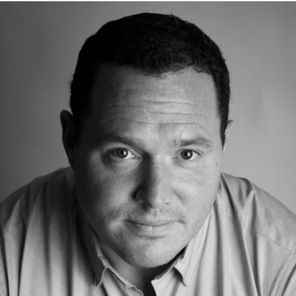
Rob Julien
Business broker, Fair Market
Hosted by Lyndon Smith & Joshua Leyenhorst
Key takeaways
- Exit planning isn't only for owners about to sell. The work that prepares a business for sale is the same work that makes it better to own.
- Value = Income ÷ Risk. Risk reduction often delivers a bigger valuation lift than chasing more revenue, but most owners spend 95% of their attention on income.
- Plan for the Dirty D's: death, disability, divorce, disagreement, disaster, debt, decline, distraction. Most SMBs have a plan for 1-2; go through all 8.
- The Diminishing Power of 1: a business is fragile whenever it depends on just one of anything. The first added unit of redundancy is the cheapest.
- For Canadian owners: review Lifetime Capital Gains Exemption eligibility years before a sale, not months. It's worth real money if you qualify.
That's the line that hit hardest in our most recent Community Connect session, hosted alongside guest expert Rob Julien, the Western-Canadian business broker behind Fair Market, who's helped dozens of SMB owners prepare their companies for an eventual sale.
The biggest, most prevalent risk to your business is you.
Rob Julien, business broker
Here's what most owners don't realize: exit planning isn't only relevant when you're 18 months from selling. The work you do to prepare a business for sale is the same work that makes the business better to own, more transferable, less owner-dependent, and worth substantially more.
Below are the frameworks Rob walked us through, and the takeaways you can apply this week, regardless of whether you ever plan to sell.
Value = Income ÷ Risk
Rob's working definition of business value:
Value equals income divided by risk. It's the closest formula I think we can get to.
The implication: to grow business value, you can either grow income (revenue, profitability) or reduce risk (de-risk the business). Most owners spend 95% of their time on the income side and almost none on the risk side.
The risk side often has a bigger valuation impact. A 20% reduction in risk can drive the same multiple expansion as years of revenue growth, without the operational lift.
The Dirty D's
Rob's framework for the categories of risk every business owner needs a plan for. He calls them the Dirty D's:
- Death, what happens to the business if you die unexpectedly?
- Disability, what if you're out of action for 6+ months?
- Divorce, how is the business protected if your personal situation changes?
- Disaster, fire, flood, cybersecurity breach, a major customer loss
- Disagreement, partner falling out, key employee departure, family conflict
Each one can take a business down. Most owners haven't documented what would happen in any of them. The exercise alone is valuable, even if you never have to use the plan.
Transferable Value vs Business Value
A business worth $5M to operate is not necessarily worth $5M to buy. Buyers care about what they're inheriting that doesn't disappear when you walk out the door.
The question Rob keeps coming back to:
What can we successfully transfer from you to someone else?
The key drivers of transferable value:
- Documented systems and processes
- A trained team that can operate without you
- Customer relationships embedded in the company, not in your phone
- Codified knowledge in a knowledge hub, not your head
This is exactly where Lyndon's coaching to community members consistently lands: “Become the least important person in your business.” The most valuable thing you can build is a business that doesn't need you in every meeting.
The Diminishing Power of 1
Rob's mental model for risk concentration: risk is dangerous whenever a business depends on just one of anything.
- One supplier
- One key employee
- One marketing channel
- One key customer (over 20% of revenue)
- One owner who knows how everything works
Diversify each. Multiple suppliers, multiple lead-gen channels, multiple senior team members, broader customer concentration. Each one you add reduces concentration risk, and increases what a buyer is willing to pay.
It also reduces the cost of any single failure on your business right now. Owners spend so much time chasing the next 10% of growth they forget that not losing what they've built is its own form of growth.
The Lifetime Capital Gains Exemption
One practical financial point Josh emphasized during the session: Canadian SMB owners can take advantage of the Lifetime Capital Gains Exemption, currently around $1.25M of capital gains shielded from tax on the sale of a qualifying small-business corporation.
But here's the catch: the business has to be in qualifying state for the 2 years prior to sale. Translation:
If you're hoping to qualify and you haven't done the structural work, you're already late. Talk to your CPA about what “qualifying state” requires for your specific corporate structure, and start the work now.
What to do this week
You don't need to plan an exit. Pick one of these and commit:
- 1Document your Dirty D's plan, just one page. What happens if you can't show up for 90 days?
- 2Pick one “single point of failure” in your business (supplier, channel, customer, team member) and identify your diversification plan.
- 3Codify one critical process you do that no one else knows. Even a 10-minute screen recording is a start.
- 4Have a real conversation with your CPA about Lifetime Capital Gains Exemption qualifying-state requirements, even if you don't intend to sell.
The work of preparing your business to sell is also the work of building a business that doesn't need you in every meeting. Either outcome is worth it.
Want the full session?
The recording, Rob's slides, and the live Q&A are in the community.
Members of The Business Growth Factor get every Community Connect session on demand, plus the resources, templates, and slide decks we work through together, and access to peers asking the same questions you are.
Join the CommunityFrequently asked
Quick answers
Why should I think about exit planning even if I have no plans to sell?
What does "Value = Income ÷ Risk" mean?
What are the Dirty D's?
What is the Diminishing Power of 1?
What is the Lifetime Capital Gains Exemption (LCGE)?
About the guest
Rob Julien
Rob is a business broker with Fair Market in Western Canada, with two decades of experience helping SMB owners, typically in the $250K–$30M revenue range, prepare for, value, and execute successful business sales. His work focuses on the period before a sale: the years of structural and operational work that determine whether the eventual transition is worth millions more or millions less.